What is IWS?
IWS stands for Integrated Work Systems. It is a management system for manufacturing operations, developed at Procter & Gamble, that provides a structured approach to eliminating losses, building capability, and sustaining performance across an entire plant or network of plants.
Unlike methodologies that focus on a single dimension (quality, maintenance, or efficiency), IWS integrates multiple disciplines into one system. It connects the daily work of operators, technicians, and team leaders to plant-level goals through a common language of loss elimination, standard work, and capability building.
In practice, IWS shows up as a combination of structured routines (daily direction setting, centreline management, clean-inspect-lubricate), loss tracking tools, and a progression model that measures how mature a line or plant is in its journey from reactive to proactive operations.
Origins and evolution
IWS emerged from the Total Productive Maintenance (TPM) tradition developed by the Japan Institute of Plant Maintenance (JIPM) in the 1970s. TPM itself built on ideas from preventive maintenance and lean manufacturing, adding the critical concept of operator ownership of equipment care.
In the 1990s, Procter & Gamble adapted TPM principles into what became known as IWS. The adaptation was significant: P&G extended the pillar structure beyond maintenance to cover the full scope of manufacturing operations, including quality, safety, supply chain, and organisation development. The goal was a single management system that could be deployed consistently across a global network of plants.
Over the following decades, other major FMCG and process industry companies developed their own versions. Unilever's World Class Manufacturing (WCM), Danone's DAMAWAY, and Nestlé's TPM-based systems all share DNA with the original JIPM methodology, but each adapted the framework to their own operational context.
Today, IWS and its variants are the dominant operational management systems in food and beverage, consumer goods, and parts of the pharmaceutical and chemical industries. The core ideas remain the same: loss-based thinking, pillar-driven improvement, operator capability building, and phased maturity progression.
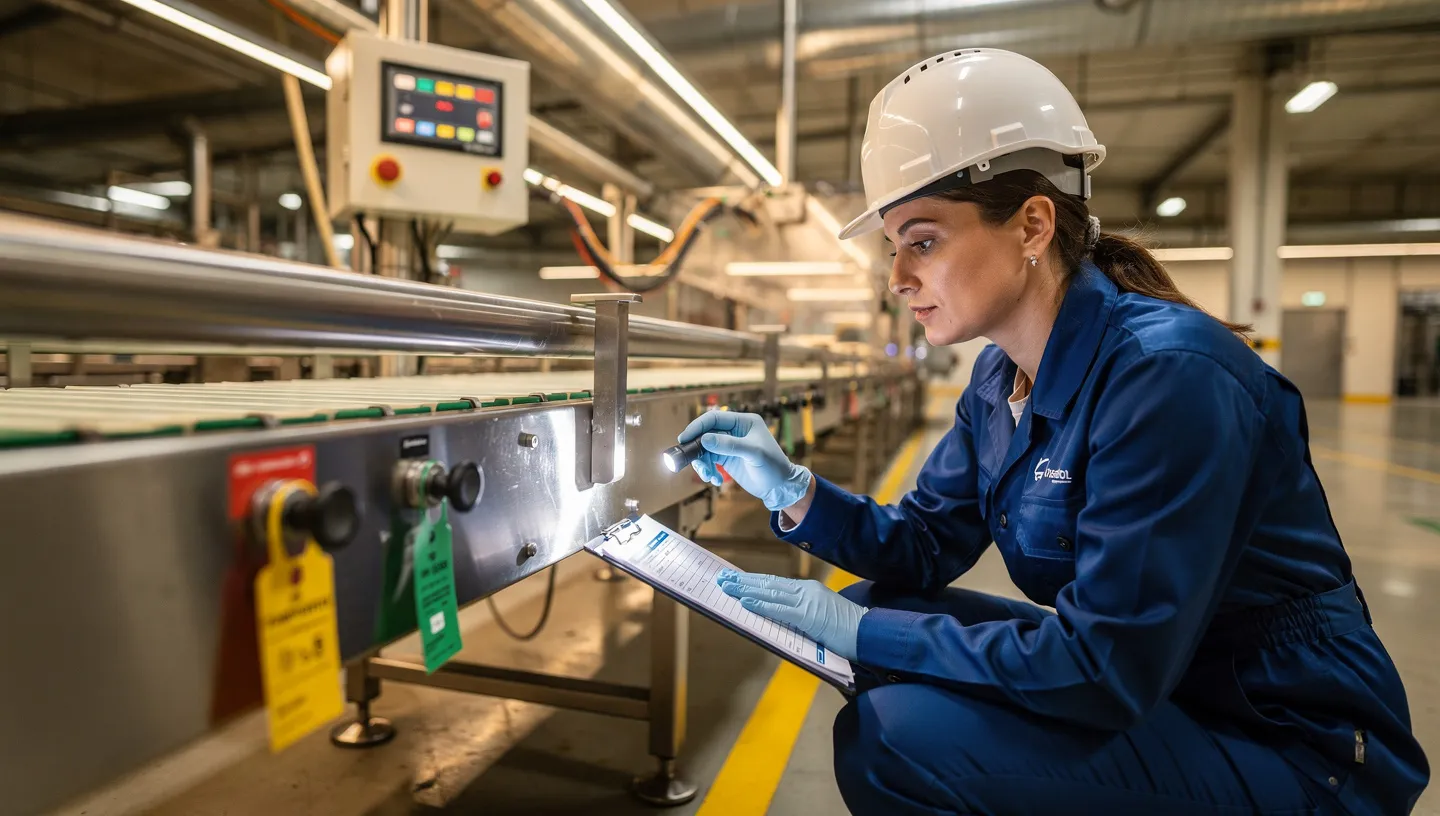
The pillar structure
IWS organises work into pillars. Each pillar owns a specific domain of operational performance and follows a phased approach from reactive to proactive. While the exact number and naming varies between companies, most implementations include these core pillars:
Autonomous Maintenance (AM)
Operators take ownership of their equipment through progressive steps: initial cleaning, elimination of contamination sources, development of provisional standards, general inspection, autonomous inspection, and ultimately self-management. The progression typically spans 7 steps and takes years to complete properly.
Progressive Maintenance (PM)
The maintenance organisation moves from reactive (fix when it breaks) to planned, predictive, and ultimately design-out maintenance. PM works hand-in-hand with AM: as operators take over basic equipment care, technicians shift toward root cause analysis and reliability engineering.
Focused Improvement (FI)
Systematic loss elimination using structured problem-solving tools. FI targets the biggest losses identified through loss analysis, applying methods like why-why analysis, PM analysis, and SMED to eliminate them at the root cause. The scale of tools matches the complexity of the loss.
Quality
Zero-defect thinking applied through quality maintenance. This pillar maps the conditions that produce defects (process parameters, material properties, equipment settings) and builds systems to maintain those conditions within spec. It connects equipment condition to product quality in a measurable way.
Education & Training (E&T)
Builds the skills needed to sustain all other pillars. E&T manages skill matrices, identifies gaps, develops training content (often as one-point lessons), and tracks qualification. It ensures that when a standard is written, people are actually trained to follow it.
Safety, Health & Environment (SHE)
Zero-accident thinking using risk assessment, hazard identification, and behaviour-based safety. SHE integrates into daily routines rather than running as a parallel program. Safety observations, near-miss reporting, and risk assessments become part of standard work.
Supply Chain / Logistics
Reduces losses in the flow of materials through the plant: warehousing, internal logistics, planning accuracy, and changeover management. Some implementations split this into separate planning and logistics pillars.
Early Management (EM)
Front-loads problem-solving into new product launches and equipment installations. EM uses lessons from existing lines to design out losses before they occur. The goal: new lines reach target performance faster, with fewer startup losses and rework cycles.
Organisation Development (OD)
Sometimes called the "people pillar." OD builds the team structures, meeting rhythms, and leadership behaviours that hold the system together. It includes daily management systems, team leader development, and the governance that connects pillar work to business results.
Each pillar follows a phased roadmap. Phase 0 is reactive (no standards, no ownership). Subsequent phases introduce standards, build capability, and shift from time-based to condition-based approaches. The highest phases represent self-managing systems where losses are anticipated and prevented before they occur.
Loss analysis and zero-loss thinking
IWS is built on the idea that every gap between theoretical maximum and actual output is a loss, and every loss has a cause that can be identified and eliminated.
The loss tree is the central analytical tool. It breaks total plant losses into categories: equipment losses (breakdowns, minor stops, speed losses, setup), process losses (startup, yield, quality defects), and organisational losses (planned downtime, logistics delays, measurement gaps). The tree makes losses visible and quantifiable.
In practice, loss analysis starts with measuring OEE (Overall Equipment Effectiveness) or a variant like TEEP (Total Effective Equipment Performance) at the line level. The gap between actual OEE and 100% is decomposed into specific loss categories. Each category gets prioritised based on cost impact, and the biggest losses become focused improvement projects.
This mindset shift is one of the hardest parts of IWS deployment. It requires operators and managers to stop accepting performance gaps as inherent to the process and start treating them as problems to solve.
Daily management systems
IWS only works if it connects to what happens every day on the floor. Daily management systems (DMS) are the mechanism that makes this connection.
A typical daily management rhythm includes:
- Centreline checks: Operators verify that critical process parameters are within spec at the start of each shift. Deviations are flagged and corrected before they produce losses.
- Clean, Inspect, Lubricate (CIL): Standard routes where operators inspect equipment condition, clean contamination points, and lubricate per schedule. CIL is the foundation of autonomous maintenance.
- Shift handover: Structured transfer of information between shifts covering equipment status, quality issues, safety observations, and open actions. Done properly, nothing gets lost between crews.
- Daily Direction Setting (DDS): Short team meetings (typically 10-15 minutes) where the team reviews yesterday's performance against targets, identifies losses, and assigns actions. DDS happens at multiple levels: team, department, plant.
- Defect handling: A process for tagging, logging, and tracking equipment defects found during CIL or production. Defects are prioritised and assigned to either operators (AM scope) or technicians (PM scope).
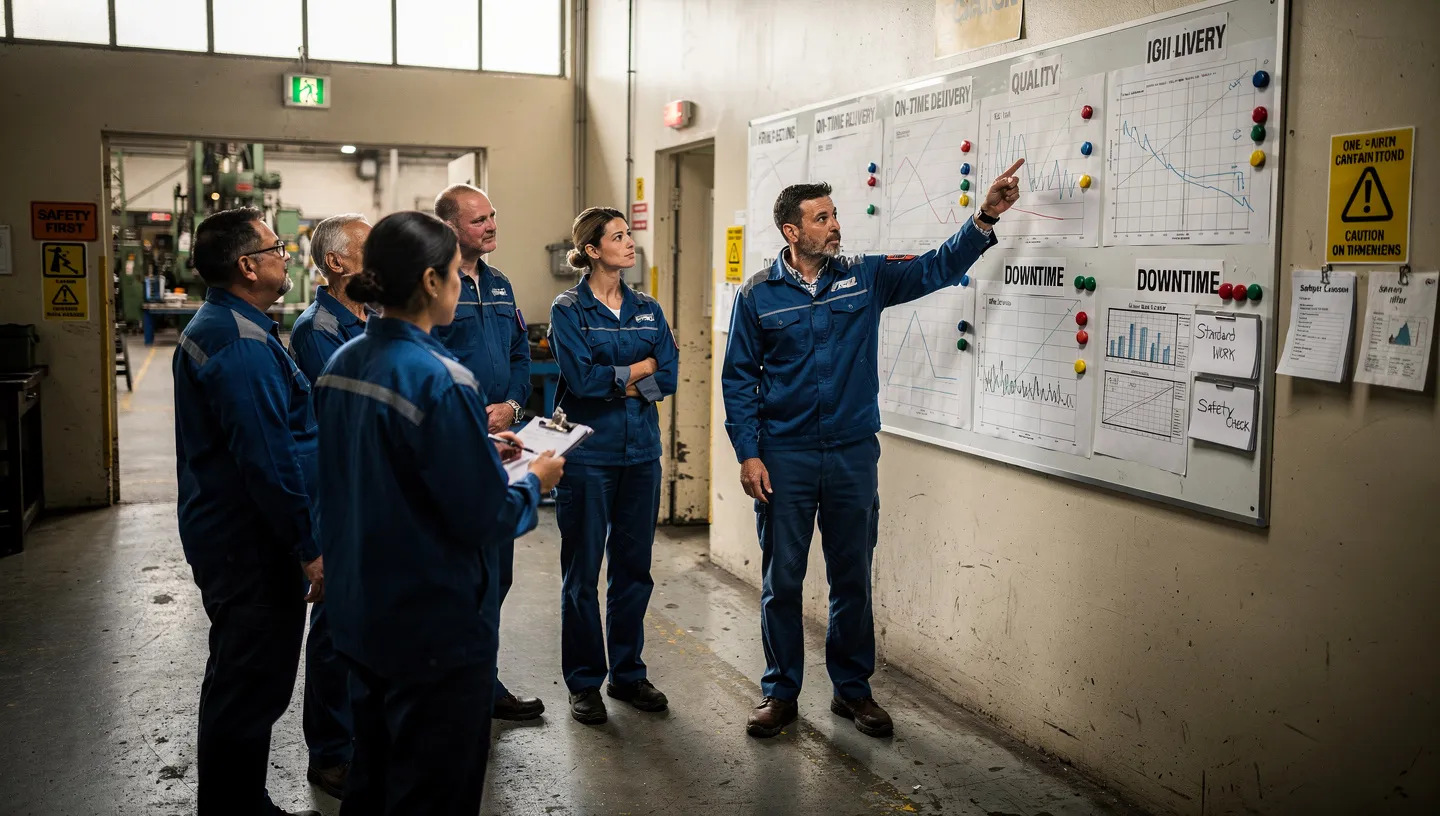
Organisational enablers
IWS requires more than tools and routines. It requires organisational structures and leadership behaviours that sustain the system over time.
Ownership structure
Each pillar has a pillar leader (typically a functional manager) and each line or area has an AM/PM owner. These roles are real: they carry accountability for pillar phase progression and loss reduction targets. In mature organisations, operators themselves own specific parts of the system (a CIL standard, a defect log, a quality checkpoint).
Meeting rhythm
IWS plants run on a layered meeting structure: daily team meetings, weekly pillar reviews, monthly plant reviews, and quarterly or annual assessments. Each layer has a defined format, a set of KPIs to review, and a process for escalating issues. The discipline of this rhythm is what keeps the system alive.
Coaching and capability building
Managers spend time on the floor, not just reviewing reports. Gemba walks, coaching conversations, and skill observations are standard practice. The role of a team leader in IWS is fundamentally different from a traditional supervisor: more coach, less controller.
Visual management
Information is made visible where the work happens. Performance boards, defect maps, CIL schedules, and loss trees are displayed at the line, updated in real time, and reviewed during daily meetings. The principle: if it's not visible, it's not managed.
Common pitfalls
IWS implementations fail or stall more often than they succeed. After decades of deployment across hundreds of plants, the failure patterns are well documented:
Pillar work without loss linkage
Teams execute pillar activities (CIL rounds, training sessions, 5S audits) without connecting them to actual loss reduction. Activity becomes an end in itself. The fix: every pillar activity should trace back to a specific loss it's trying to eliminate.
Phase progression as a goal
Plants chase phase assessments (moving from Phase 1 to Phase 2) for the recognition rather than the capability. Standards are written to pass audits, not to be used. Results plateau because the underlying capability wasn't built.
Leadership turnover
IWS takes years to mature. When plant managers rotate every 2-3 years (common in multinationals), each new leader resets priorities. The system loses momentum. Sustainable IWS requires leadership continuity or very strong institutionalisation.
Parallel systems
IWS is supposed to be the management system, not an addition to it. When IWS runs alongside (instead of replacing) existing quality systems, safety programs, and maintenance processes, it becomes extra workload rather than a better way of working.
Paper-based overload
Traditional IWS generates enormous amounts of documentation: CIL checklists, defect logs, one-point lessons, skill matrices, loss trees. When this stays on paper, it becomes a burden. People fill in forms but nobody analyses the data or acts on it.
Measuring maturity
IWS uses phased assessments to measure how mature a line, area, or plant is. The assessment model varies by company, but the underlying logic is consistent:
| Phase | Focus | What it looks like |
|---|---|---|
| 0 – Reactive | Firefighting | No standards. Equipment breaks, people react. Losses are accepted as normal. |
| 1 – Initial condition | Restore and clean | Equipment restored to base condition. Initial cleaning reveals defects. Basic standards written. |
| 2 – Eliminate sources | Prevent recontamination | Contamination sources and hard-to-access areas addressed. CIL times reduced. Standards improving. |
| 3 – Provisional standards | Standardise and sustain | Operators own CIL standards. Defects tracked and trending down. Basic skills verified. |
| 4 – General inspection | Build equipment knowledge | Operators understand how their equipment works. They inspect beyond cleaning. Failure modes understood. |
| 5+ – Autonomous | Self-manage | Operators detect and correct abnormalities before losses occur. Continuous improvement is embedded. |
Phase assessments are typically done by internal or external assessors who evaluate evidence on the floor: the condition of equipment, the quality of standards, operator knowledge, loss trends, and the maturity of daily routines.
The timeline is slow by design. Moving a single line from Phase 0 to Phase 3 typically takes 18-24 months of sustained effort. Skipping phases or rushing assessments undermines the capability building that each phase is designed to deliver.
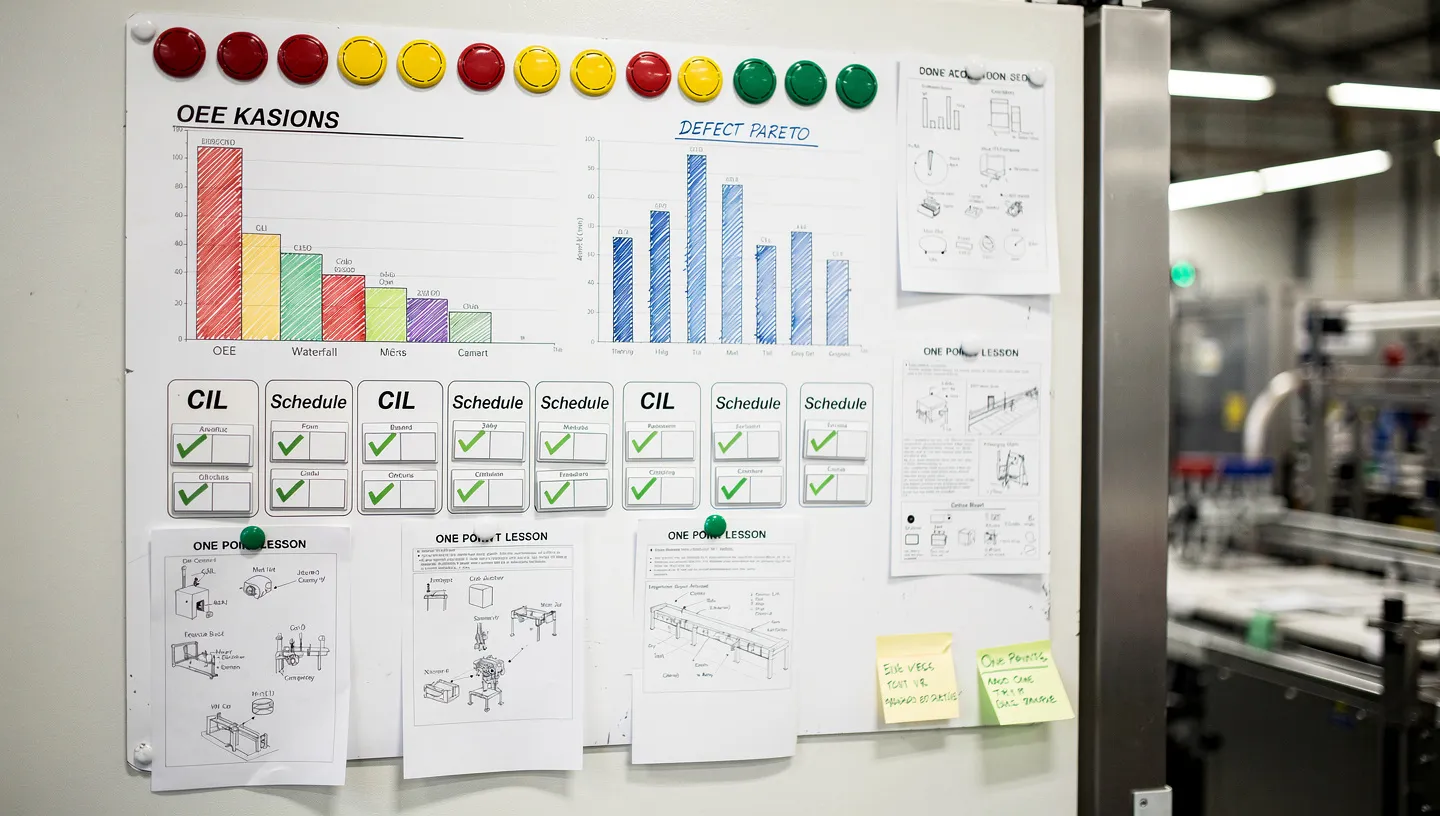
IWS and digital tools
IWS was designed in an era of paper-based management. Checklists, defect tags, loss trees, skill matrices, and one-point lessons were all physical artifacts posted on boards and filed in binders. This worked in single-plant deployments, but it creates real problems at scale:
- Data from CIL rounds and defect logs is captured but never aggregated or analysed
- Standards exist in binders that nobody opens after the assessment
- Skill matrices are maintained in spreadsheets that are outdated by the time they're printed
- Loss analysis depends on manual data entry, which introduces delay and errors
- Knowledge stays locked to individual operators or single shifts
Digital tools can address these problems without changing the underlying methodology. The system stays the same. What changes is how information flows: CIL findings become structured data instead of checkmarks on paper. Defect logs become trackable workflows. Skill matrices update when someone completes a training. Loss trees connect to real-time OEE data.
The most effective digital implementations focus on reducing administrative burden (less time filling in paper, more time on the floor), making information accessible (the right standard, at the right machine, when you need it), and enabling analysis (loss trends across shifts, defect patterns across lines) that was impossible with paper.