Right now, the day shift produces competent new hires in three weeks. The night shift does their best. Nobody tracks which modules were actually completed versus which were signed off in a hurry. Three months in, you're still not sure if the new hire can run the line independently.
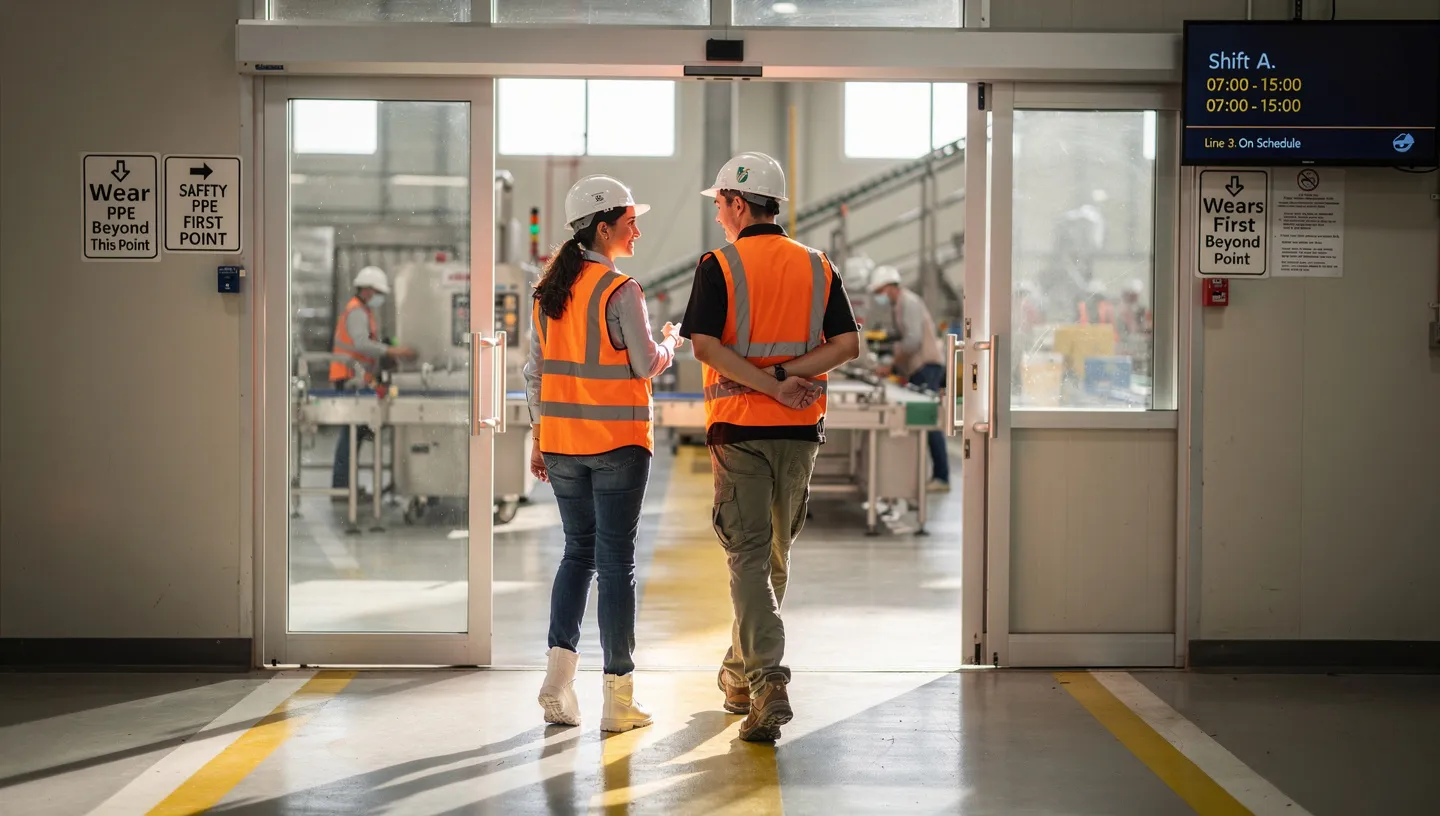
Same company. Same role. Same week. Two completely different onboarding experiences.
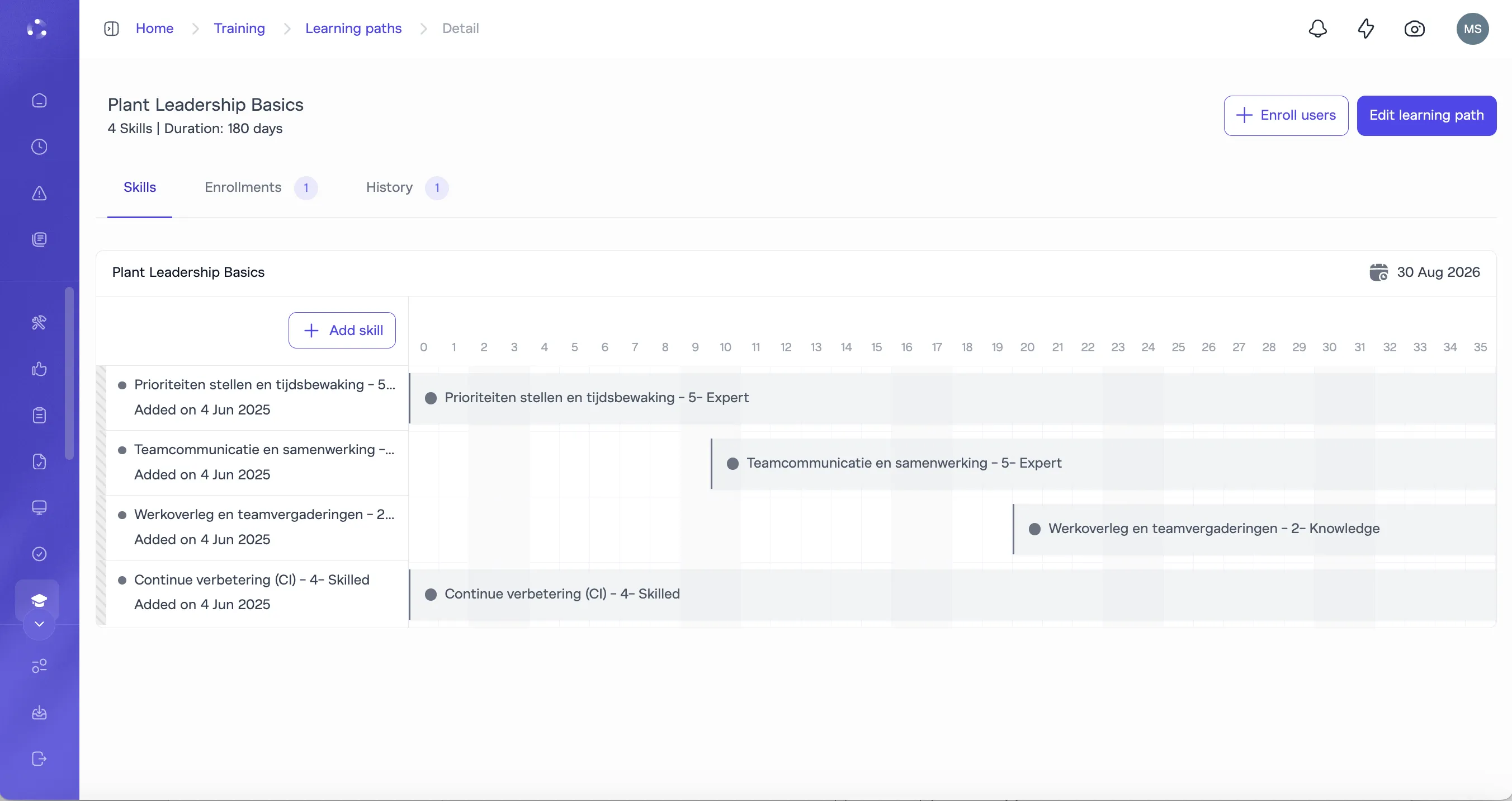
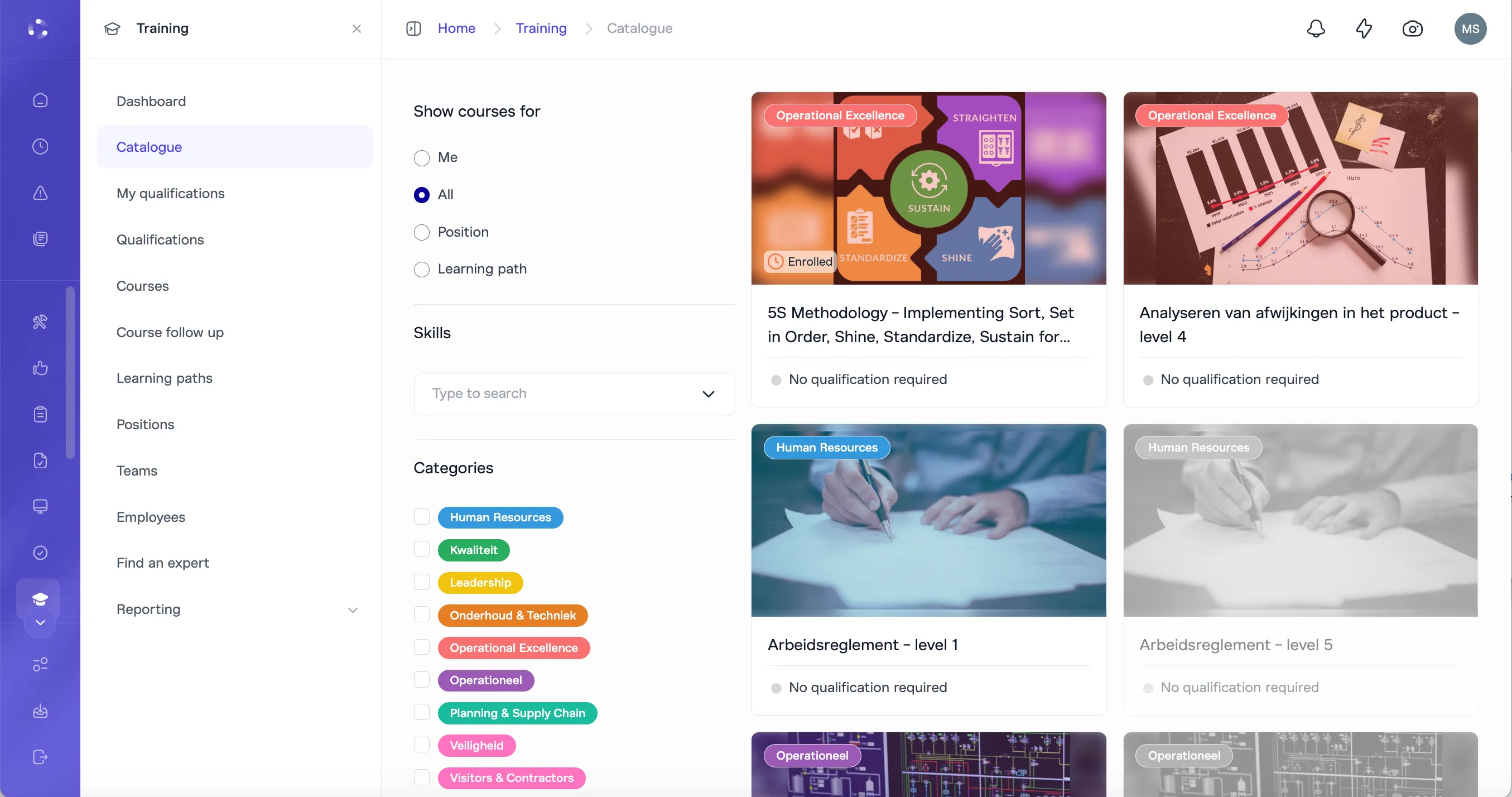
Role-based learning paths with prerequisites and sequencing. Online modules for theory. Classroom sessions for procedures. On-the-job training for execution. The path is defined once, then every new operator follows it consistently. Seasonal workers get shorter paths covering essential safety and quality. When they return next season, their previous progress is preserved.
"We went from 'it depends on the mentor' to 'every new hire follows the same path.' Consistency changed everything."L&D Manager, Food Manufacturing
Completed training grants qualifications. Qualifications gate access to checklists in Standard Work. A new operator physically cannot execute tasks they haven't been trained and assessed on. Competence is verified before responsibility is given. No more hoping they're ready.
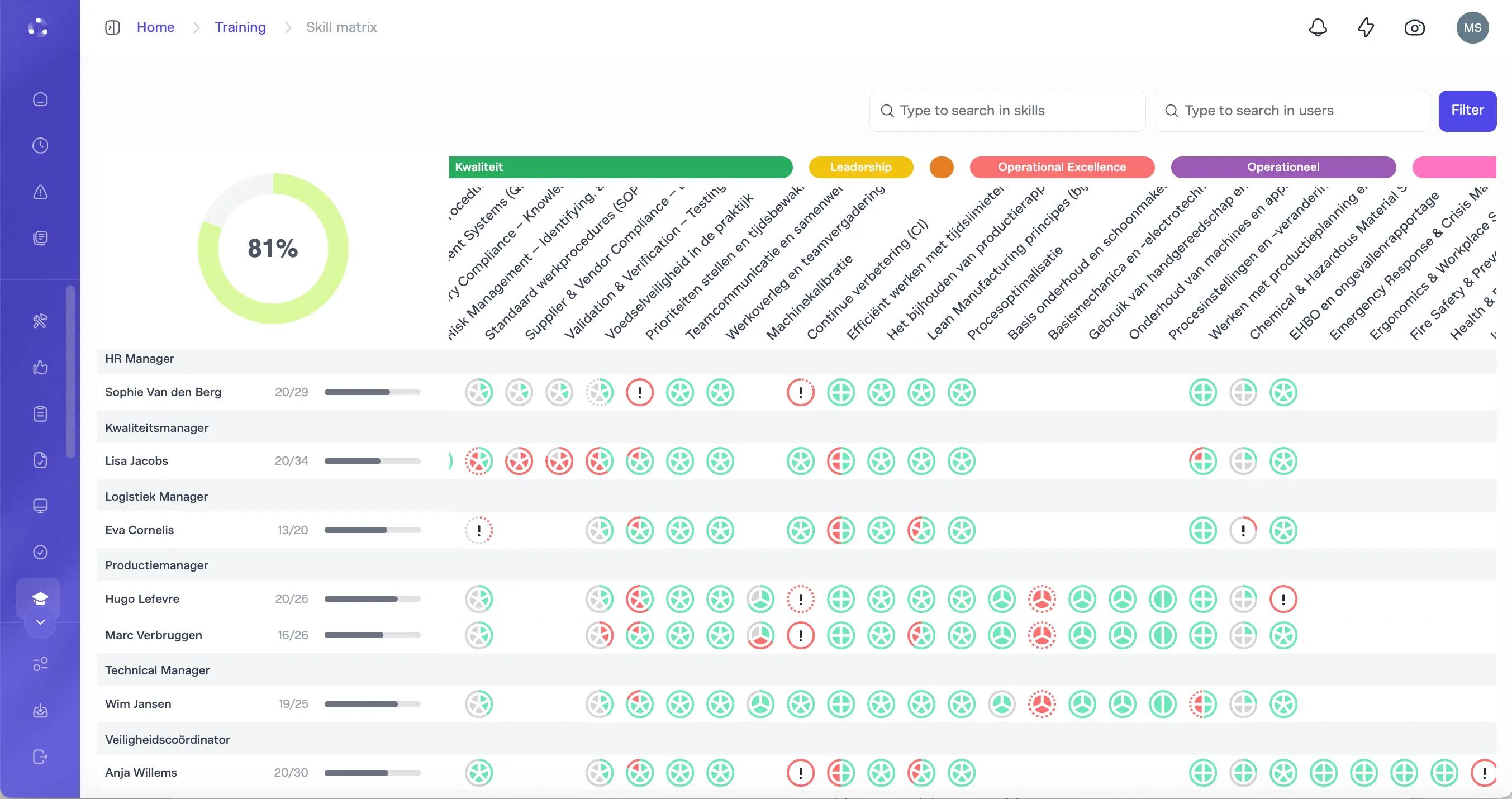
From first login to full qualification. Every step tracked, assessed, and visible.
Online safety modules, site orientation. Completed before touching the floor.
Structured observation. Each OJT session logged with assessment criteria, not just a signature.
New operator executes tasks under supervision. Mentor assesses against defined criteria per task.
Operator runs basic checklists independently. Advanced tasks still gated until qualification complete.
All modules passed. All OJT assessed. Qualification granted. Full checklist access unlocked. Certificate generated.
The learning path doesn't just include SOPs. It includes troubleshooting guides, one-point lessons, and process insights captured from experienced operators. New hires inherit knowledge, not just procedures. They learn what the manual says and what the floor actually does.
"New operators used to take three months to feel confident. Now they're running independently in four weeks."Production Manager, Chemical Manufacturing
“We onboard 60 seasonal operators every summer. It used to be chaos. Now every single one follows the same path, and we can see exactly who's on track and who needs attention. Onboarding quality doesn't depend on the shift anymore.”HR Manager, European Food Manufacturer
Multi-site food company. 60 seasonal hires per year. Onboarding time reduced from 10 weeks to 4.
Read full story →See structured operator onboarding from day one to full qualification.