Knowledge Retention

The knowledge is leaving. You can feel it already.

There's an operator on your floor who can diagnose a quality issue by sound. Another who knows why Line 4 drifts during humidity changes. A third who carries a mental troubleshooting flowchart for every failure mode, refined over fifteen years. None of it is written down. And they're counting down to retirement.

Experienced operator sharing process knowledge with a colleague on a chemical production floor

The real problem isn't documentation. It's architecture.

You've tried knowledge transfer projects. Someone ran a workshop, captured a few documents, filed them in SharePoint. Nobody reads them because they're disconnected from the moment an operator actually needs that knowledge.

SOPs describe the standard process. The real expertise is in knowing what to do when the standard process doesn't work. That's the knowledge you're losing.

What's documented
SOPs Work instructions Equipment manuals
The surface
What operators actually know
Why Line 4 drifts in summer
The sound a motor makes before it fails
The sequence that prevents jams at high speed
Which supplier batch runs differently
The trick that saves 20 min on changeovers
How to recover from a deviation without stopping the line
The workaround for the sensor that reads high on cold mornings
Which valve to bleed first after a shutdown

Capture knowledge where the work happens

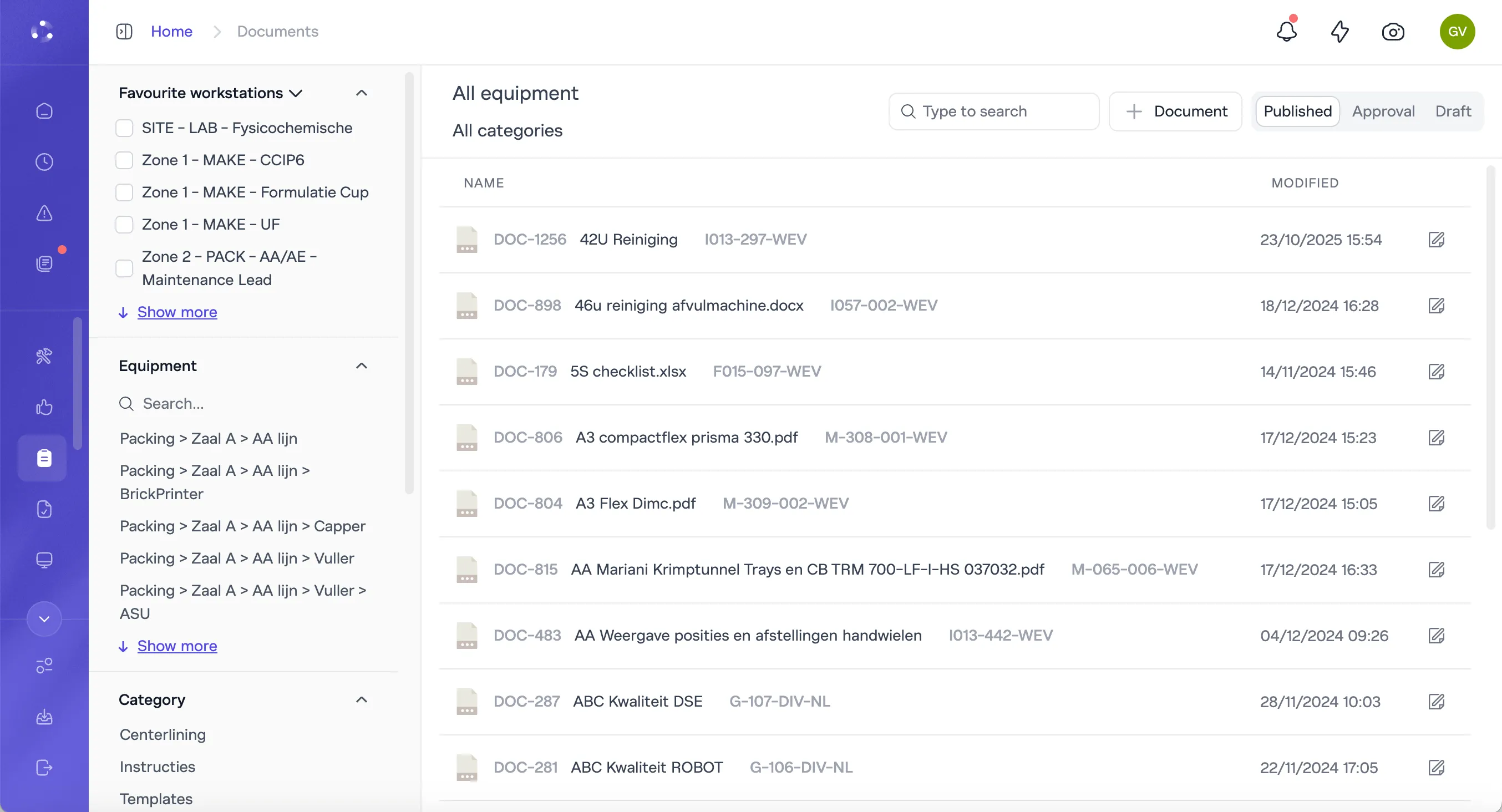
Troubleshooting guides, one-point lessons, and process tips created from real incidents and real operator experience. Linked to specific equipment, failure modes, or procedures. Captured in the system operators already use daily, not in a separate knowledge base nobody visits. When an experienced operator resolves a complex issue, the troubleshooting path becomes a reusable guide available to the next person who faces the same problem.

Troubleshooting GuidesOne-Point LessonsProcess TipsEquipment-LinkedOperator-Created
P
"We lost two operators with 25 years of combined experience last year. This time, their knowledge stayed."
Plant Manager, Process Manufacturing
See Document Management
Maecos
Maecos document management showing linked troubleshooting guides and one-point lessons

Connect knowledge to training and qualifications

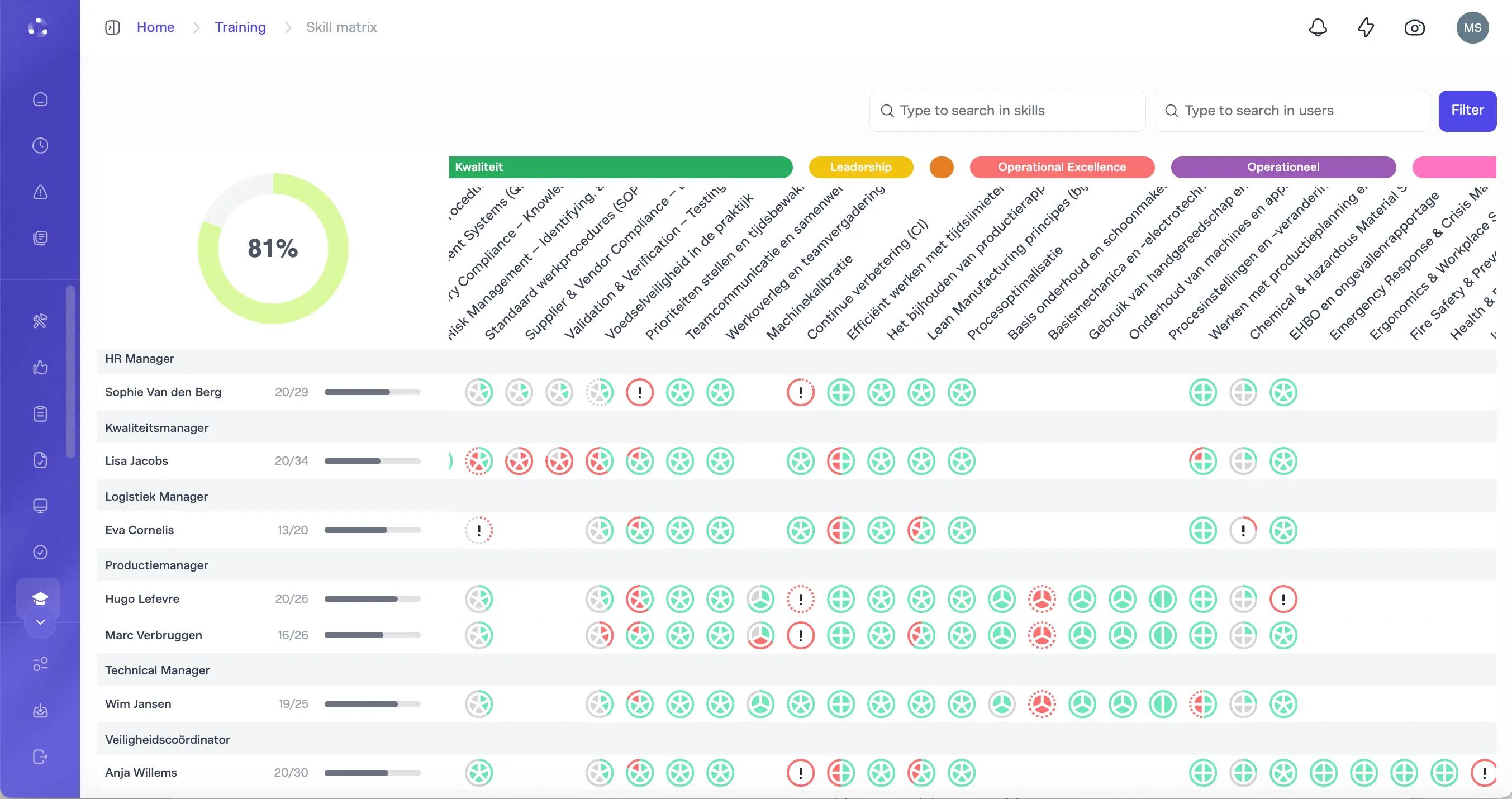
Captured knowledge doesn't just sit in a document library. A troubleshooting guide becomes a learning resource. A one-point lesson becomes part of an onboarding path. Expert knowledge transfers from individual experience to organizational capability. The skill matrix shows where critical knowledge is concentrated in one or two people, so you see the risk before someone gives notice.

Learning PathsSkill MatricesCross-Training PlansKnowledge Gap AnalysisRisk Visibility
See Training & Qualifications
Maecos
Maecos skill matrix showing knowledge concentration and gap analysis

Knowledge that works is knowledge that flows

Most knowledge management tools stop at capture. Maecos connects capture to training to execution to improvement, so knowledge doesn't just exist, it transfers.

1

Capture

Operator resolves an issue. The troubleshooting path is captured as a guide, linked to equipment and failure mode.

Documents
2

Structure

The guide is linked to the relevant SOP, tagged by equipment and area. It becomes part of the formal knowledge base.

Documents
3

Train

The guide is added to onboarding paths. New operators inherit the troubleshooting knowledge as part of their training, not by luck.

Training
4

Surface

QR code on the equipment links to the guide. When the next operator faces the same issue, knowledge is one scan away.

Standard Work
5

Improve

The next operator adds context: a new edge case, a faster approach. The knowledge improves with every use. It compounds.

Continuous Improvement

Surface knowledge at the moment of need

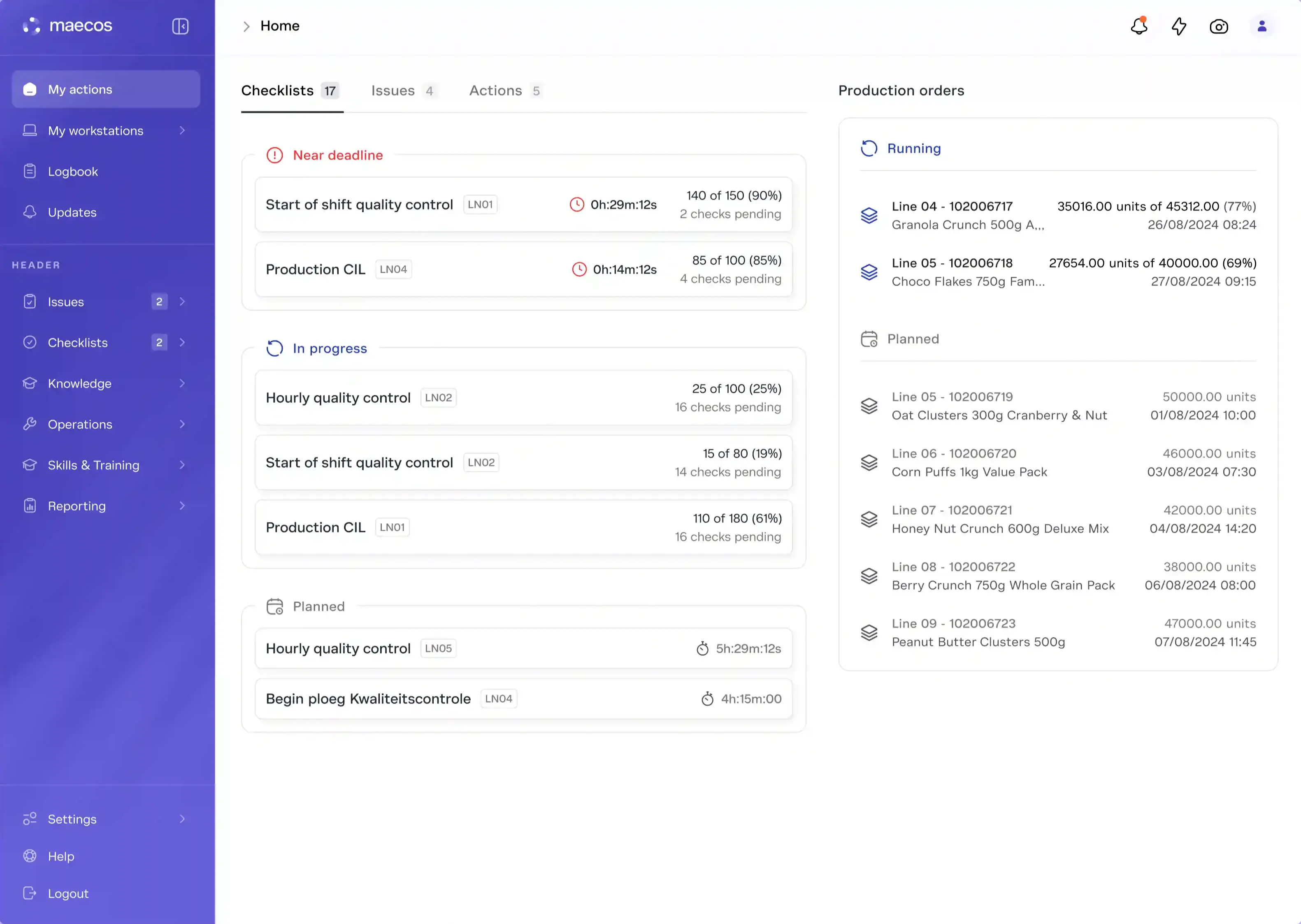
QR codes on equipment link to relevant documents, troubleshooting guides, and one-point lessons. Shift logbook entries are searchable with full operational context, so when something similar happens six months later, the institutional memory is there. Not buried in a SharePoint folder. Right there, in context, when the operator needs it.

QR-Linked KnowledgeSearchable LogbookEquipment ContextShift NotesOperational History
L
"Our operators used to call the shift lead for everything. Now they scan the QR code and the answer is right there."
L&D Manager, Chemical Manufacturing
See Standard Work Module
Maecos
Maecos task center showing contextual knowledge linked to operator tasks

See the risk before it becomes a crisis

Knowledge concentration risk

The skill matrix shows where critical competencies sit with one or two people. You plan cross-training before a gap becomes a crisis.

Retirement countdown

When operators with deep expertise approach retirement, you see which knowledge areas need transfer plans. Months before their last day, not weeks.

Knowledge coverage by area

See which equipment, lines, or processes have documented troubleshooting knowledge and which are running on memory alone.

Experienced operator sharing process knowledge with a younger colleague
“We used to say 'if John retires, Line 3 is in trouble.' Now Line 3 runs the same regardless of who's on shift, because John's knowledge lives in the system.”
Operations Director, European Process Manufacturer

Multi-site chemical company. 300+ operators. Knowledge retention program built on Maecos in 8 weeks.

Read full story

The knowledge is leaving. The question is whether it transfers first.

See how Maecos connects operational knowledge to training and daily execution.