KPIs reviewed. Issues discussed. Decisions made. Actions assigned and tracked. Every meeting in Maecos produces a record that drives follow-through, not a set of notes that disappear into someone's inbox.
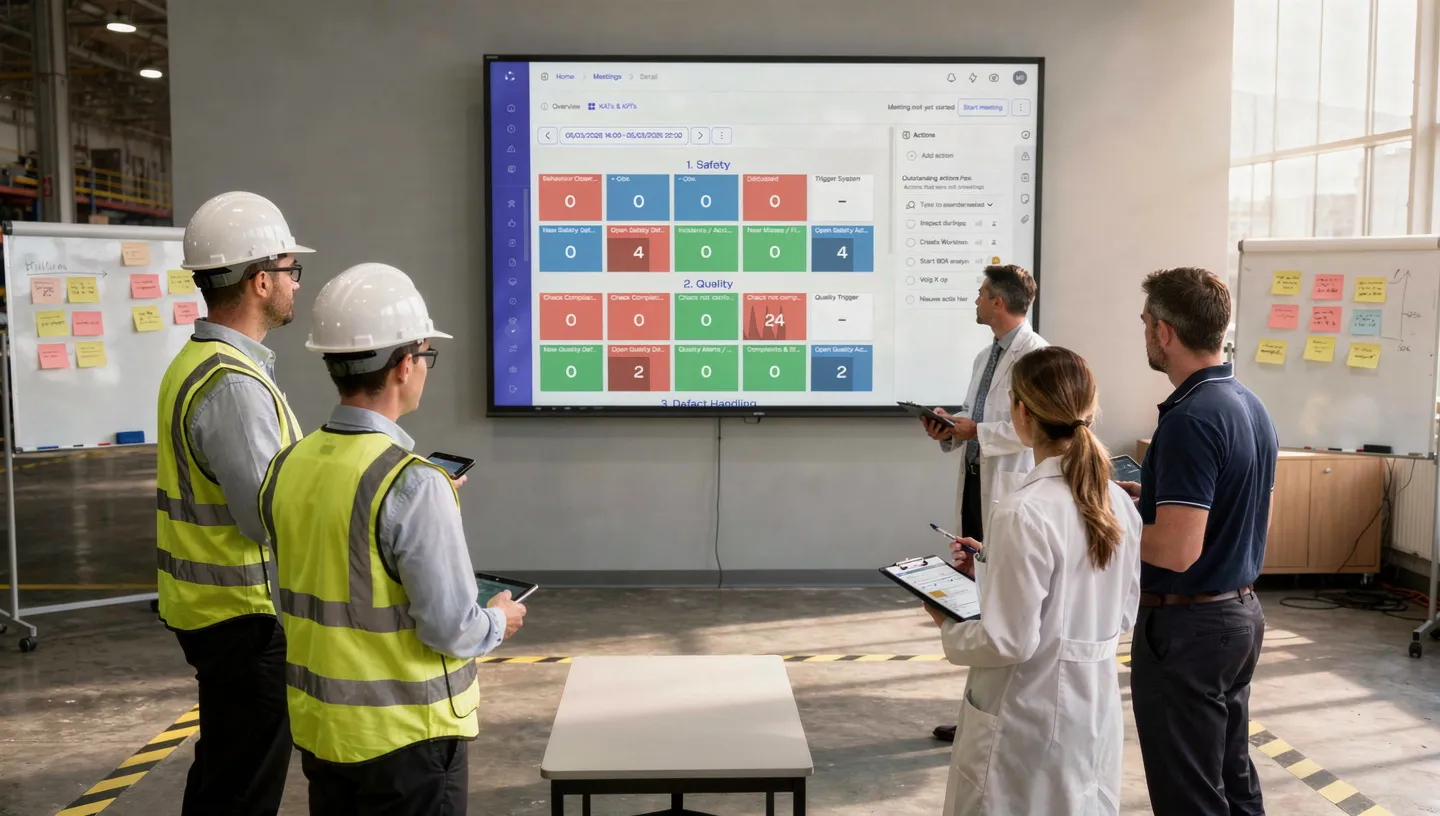
Recurring meetings with standardized agendas, daily stand-ups, weekly reviews, monthly performance meetings. Each meeting type pulls the right KPIs, the right open items, and surfaces what needs attention. The agenda isn't built from scratch. It's generated from the operational data that matters for that meeting level.
Performance data pulled in real time. OEE, deviation trends, checklist compliance, training status, open actions. The meeting screen shows the numbers the team needs to discuss. No pre-building reports. No “the data isn’t ready yet.” The dashboard is the agenda's backbone.
Actions are created directly from discussion points, assigned on the spot, deadline set, tracked in Action Management. At the next meeting, the action reappears on the agenda for review. No more “we discussed this last week, who was supposed to follow up?” The meeting drives the action. The system drives the follow-through.
Decisions recorded. Attendance logged. Discussion points and their outcomes preserved. Searchable history across all meeting types and cadences. When someone asks what was decided about Line 3 two months ago, the answer exists, with context and the actions it produced.
Monday morning. The weekly performance meeting opens. The dashboard shows last week's numbers: OEE stable, but deviation count up on Line 1. Three issues logged, two resolved, one still in investigation. Two training modules overdue.
The team discusses the Line 1 trend. Root cause traces to a procedure change three weeks ago. An action is created: update the SOP, retrigger training, review after one week. Assigned to the line lead. Deadline set.
Next Monday, the meeting opens again. The action appears on the agenda, completed. Training confirmed. Deviation trend on Line 1: back to baseline. Closed.
The meeting where the same problem was discussed for the third time. The action that was agreed upon but nobody tracked. The KPI review that used last week’s data because the dashboard wasn’t ready.
Meetings don't fail because people don't care. They fail because the system between meetings doesn't work.
“The same issues used to come back every week because nobody could confirm the actions were done. Now the meeting opens and you see it, closed, open, overdue. No more guessing.”
— Plant Manager, Pharmaceutical Manufacturing
Yes. Meeting types are fully configurable, daily stand-ups, weekly performance reviews, monthly management meetings, or custom cadences. Each meeting type has its own agenda template, KPI set, and review structure. This maps directly to tiered meeting structures like Tier 1/2/3 commonly used in lean manufacturing.
Yes. Dashboards pull real-time data from across the platform. OEE, deviation trends, checklist compliance, training status, open actions. No pre-building reports. The meeting starts with the current state, not a snapshot from yesterday.
Yes. Any discussion point can generate an action, assigned to a specific person with a deadline, tracked in Action Management, and automatically surfaced at the next meeting for review. The link between meeting and follow-through is structural, not dependent on meeting minutes.
Yes. Every meeting produces a record, decisions, attendance, discussion points, and outcomes. Records are searchable across meeting types, dates, and topics. When you need to trace back to when a decision was made and what actions it produced, the history is accessible.
Live KPIs, structured agendas, and action tracking built into every meeting cadence.