You're responsible for output, quality, safety, and people development across shifts you can't always see. Right now, consistency depends on who's on shift, and you can't be on every shift. The tools don't talk to each other. The knowledge lives in people's heads.
Your first hour every day is detective work. Piecing together what happened overnight from a whiteboard, a logbook, an email, and two phone calls. Then walking into a morning meeting presenting a picture you're 80% sure is accurate. The rest of the day is gap management: the investigation that stalled in someone's inbox, the new hire nobody flagged as under-qualified, the SOP change that night shift hasn't seen yet.
Four priorities that determine whether an operations leader sees real value or just another tool to manage.
You need every shift to start with full context of what happened, what's pending, and what needs attention.
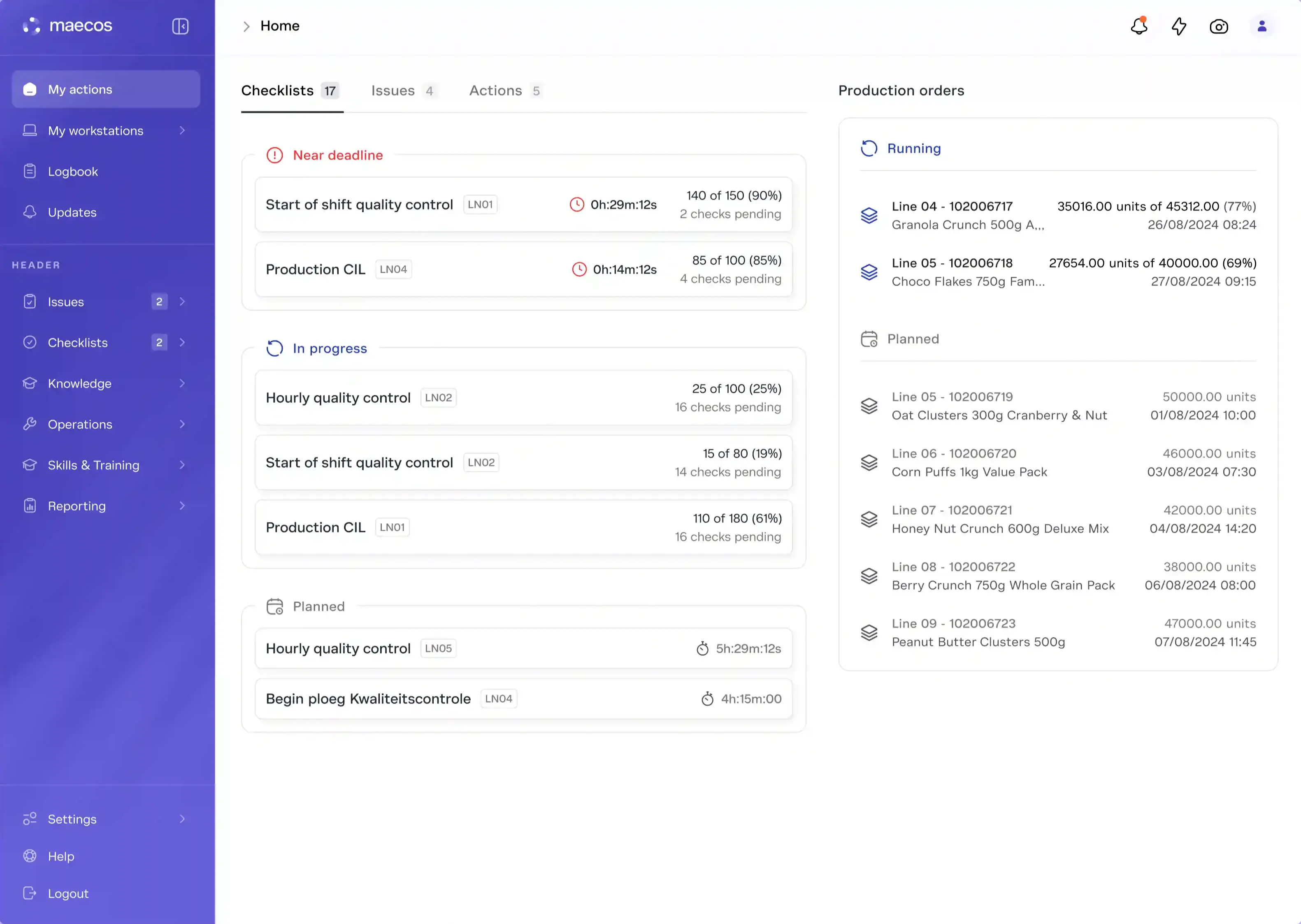
Shift handovers pre-populated from the system: production status, open deviations, pending actions, equipment flags, quality issues. The incoming shift gets context, not headlines. Nothing falls between shifts because nothing depends on memory.
You need operators executing the current procedure correctly, regardless of shift or experience level.
Qualification-gated checklists mean operators execute the current procedure version, or they don't execute at all. When a procedure changes, retraining triggers automatically. You stop relying on supervisors to cascade updates verbally.
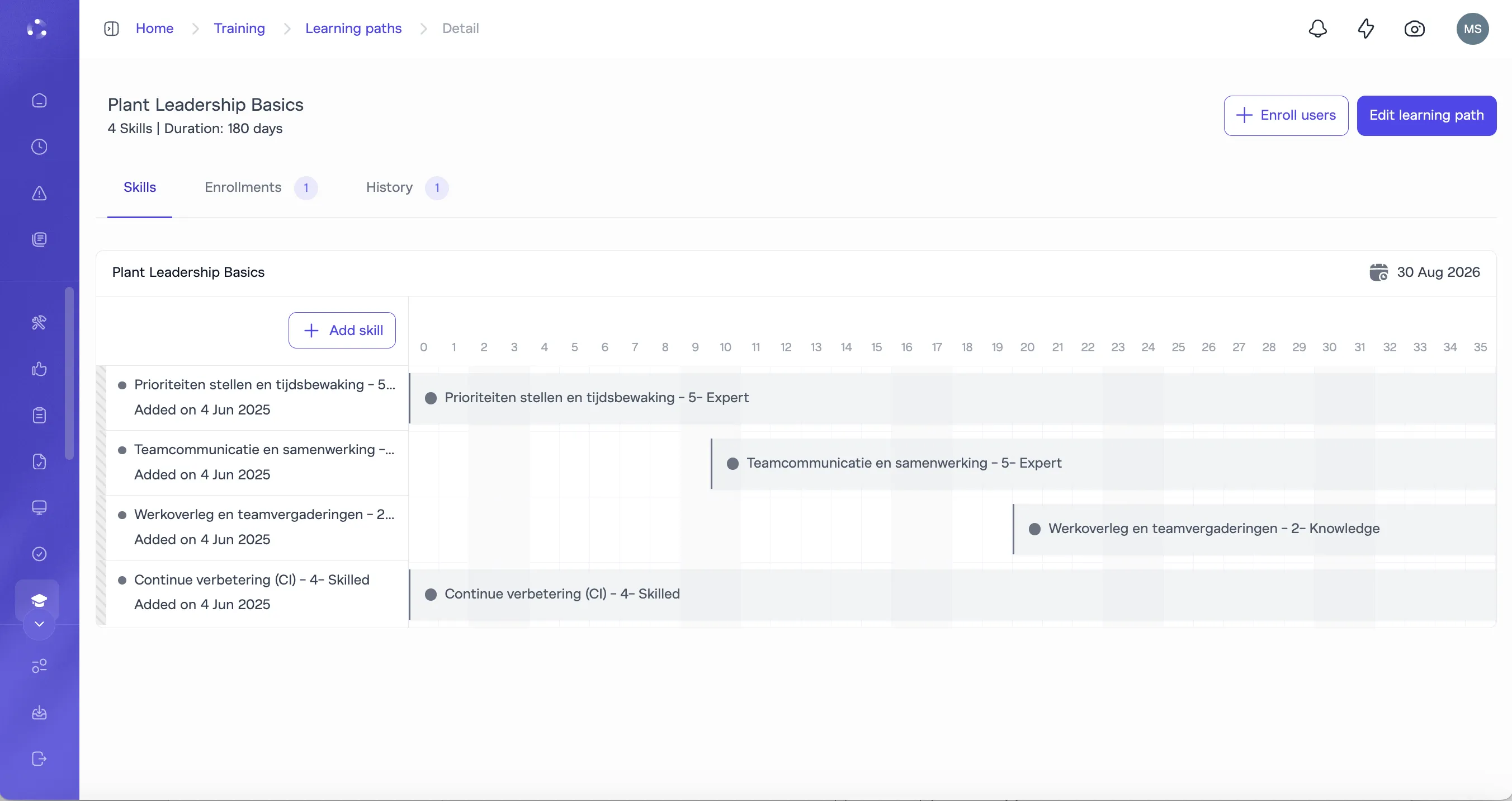
You need to know who's qualified for what, where the gaps are, and where knowledge concentrates in one person.
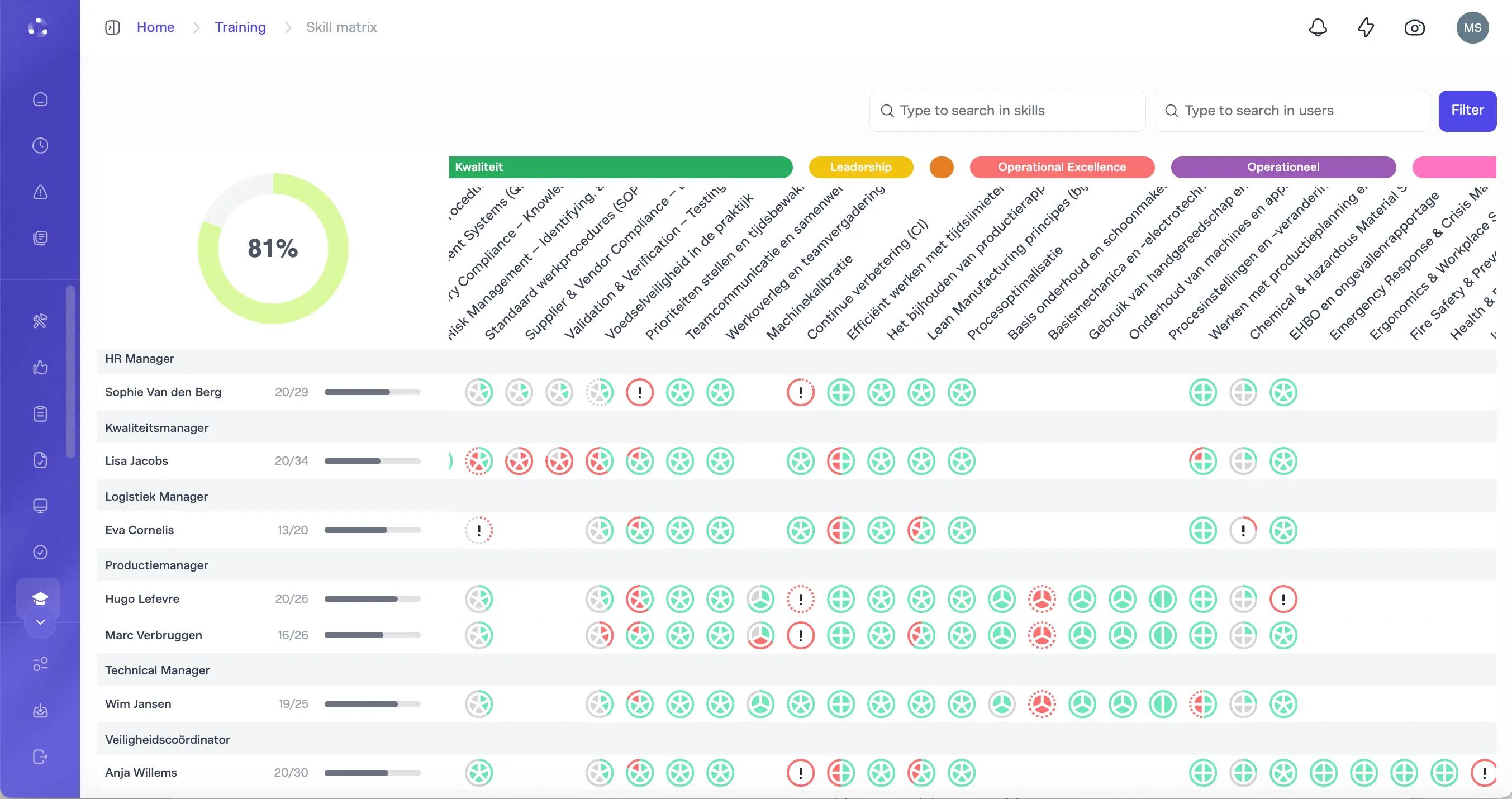
The skill matrix updates as training completes. Real time, not a quarterly Excel refresh. You see which qualifications are about to expire, which lines have single-person dependencies, and where cross-training should happen next.
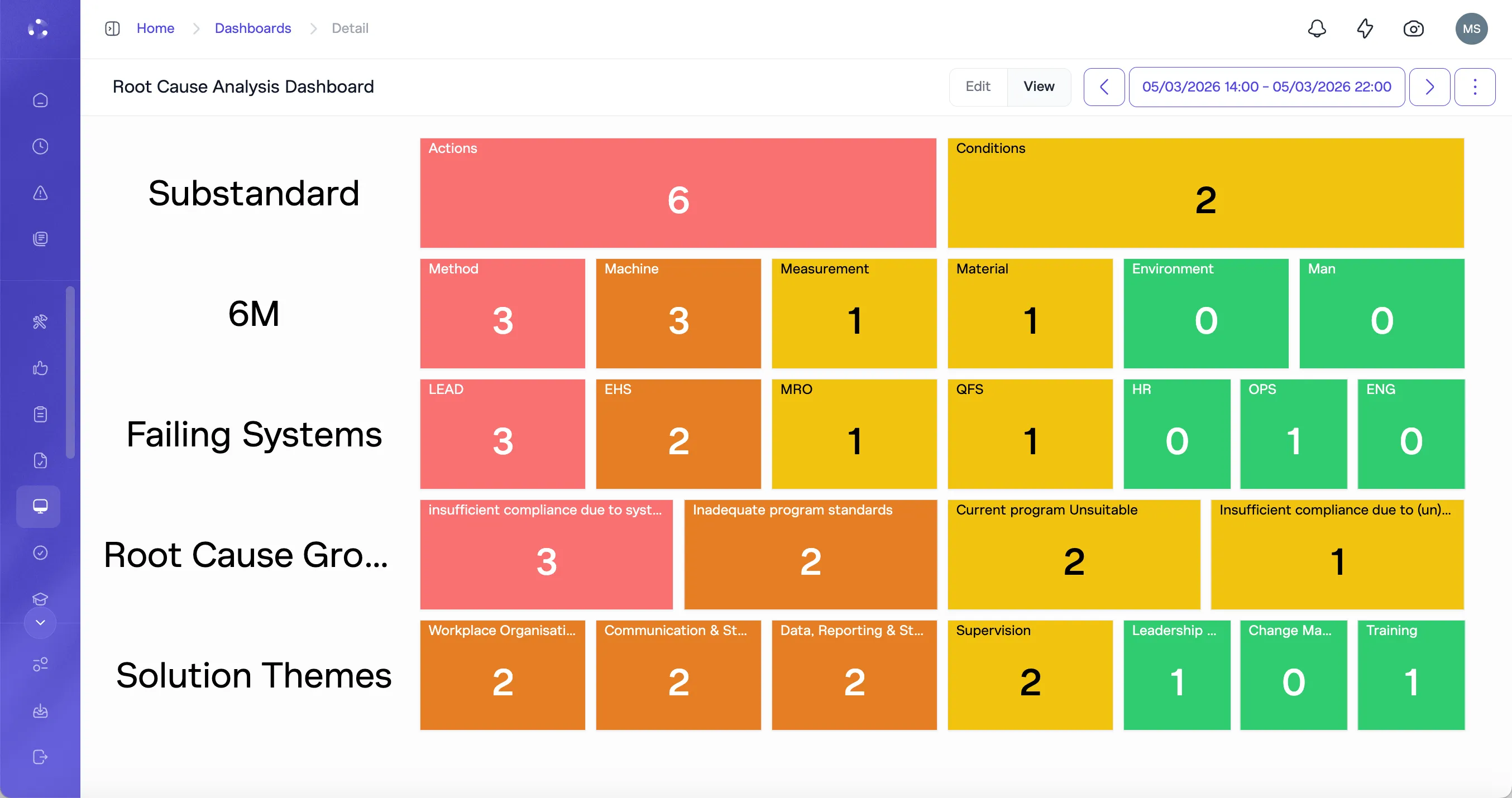
You need deviations captured in context, investigated to root cause, and tracked to corrective action closure.
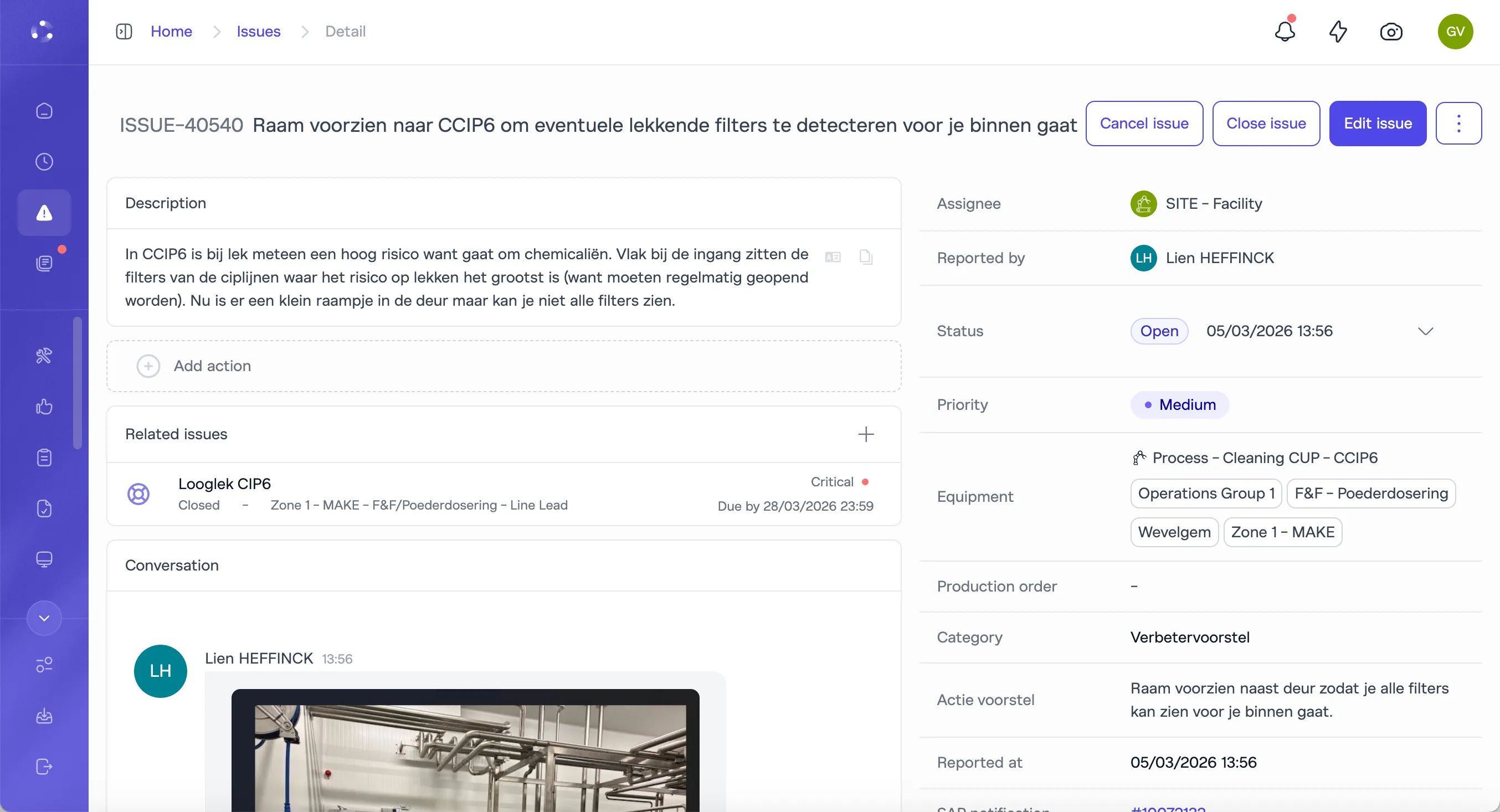
Every deviation captured during execution with full context: line, product, operator, procedure version. Root cause analysis structured with the Why-Why tool. Actions assigned with deadlines and automatic escalation. One view shows what's overdue across the plant.
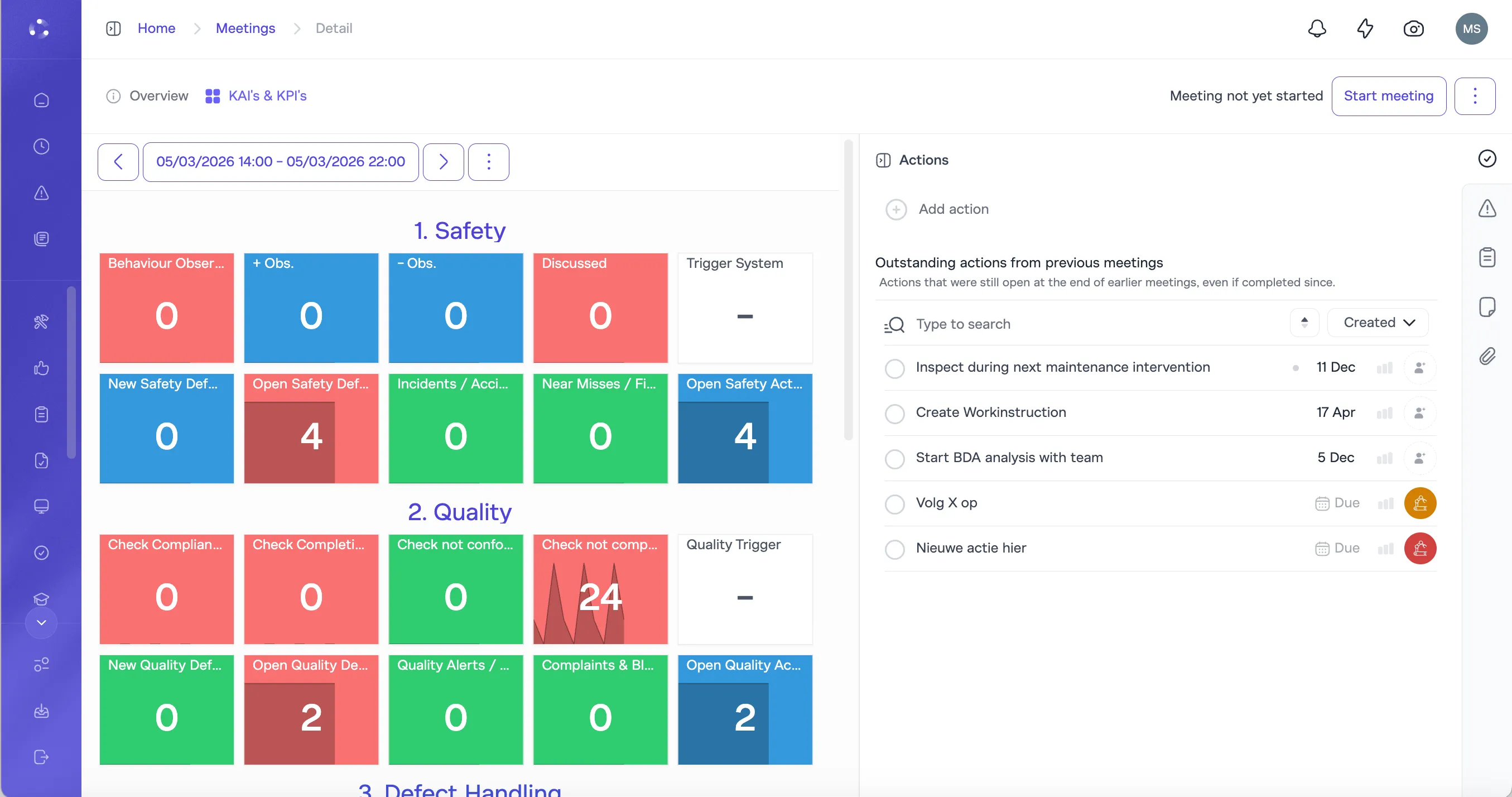
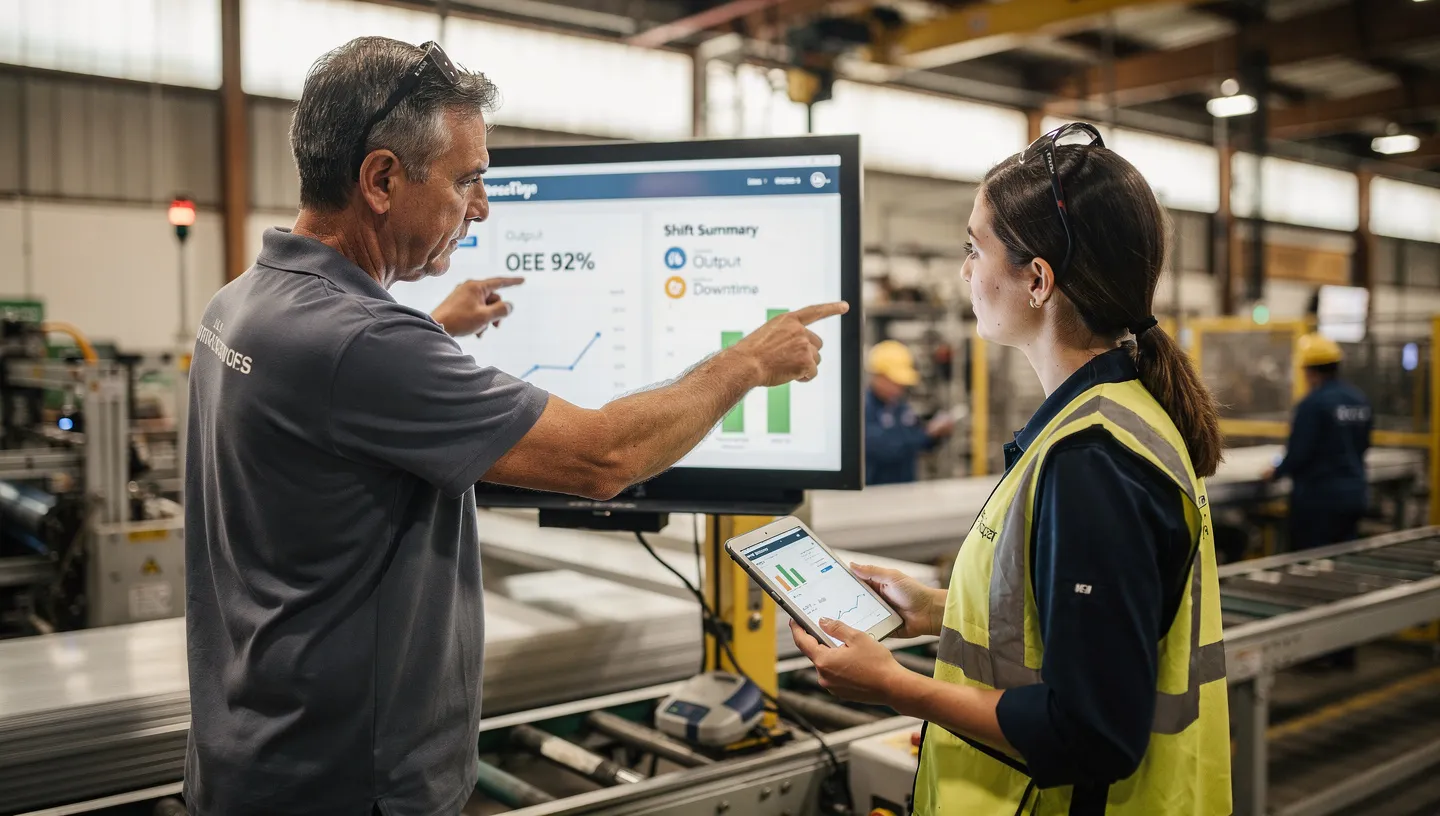
Daily stand-ups, weekly reviews, monthly management reviews. Each meeting tier pulls live KPIs from the system. You walk in, the screen is ready. No one prepared slides. The meeting produces actions, and those actions are tracked in the same system. Tier 1 feeds Tier 2. Tier 2 feeds Tier 3. Escalation flows up. Resolution flows down.
"We eliminated two hours of meeting preparation per week. The data is live. The actions carry over. We just walk in and start."Plant Manager, Food & Beverage
We've been through this evaluation many times. Here are the three things operations leaders always want to know.
Maecos replaces tools operators already use: paper checklists, Excel logbooks, separate LMS logins. It's not an additional system. It's the system that replaces the others. Operators open Maecos at the start of shift and it shows them their tasks. Adoption follows function.
Most deployments start with one line or one area. Within the first pilot phase (typically 8 to 12 weeks), shift handovers run from the system, checklists are digital, and the first training paths are live. You don't need a big bang. You start where the pain is biggest.
No. SAP handles production planning and master data. Maecos handles what SAP doesn't cover: operator checklists, shift handovers, training, issue management, and knowledge capture. Data flows between both systems. Maecos fills the operator workflow gap, not the ERP gap.
Structured learning paths from day one to full qualification. Every OJT session tracked and assessed by the supervisor. Online modules with quizzes, not just sign-offs. Progress visible to the operator, their mentor, and you. The seasonal worker on night shift gets the same quality of onboarding as the permanent hire mentored by your best operator.
"New operators used to take 10 to 12 weeks before we trusted them on a line alone. Now it's four weeks with full traceability."Operations Director, Chemicals
Monday morning starts with detective work: whiteboard notes, logbook entries, emails, phone calls. You piece together the weekend picture.
Monday morning starts with a complete shift log, open actions, and KPI summary. The system captured it during the weekend.
The skill matrix is a quarterly Excel export. When someone asks who can run Line 4, it takes phone calls to find the answer.
The skill matrix is live. One click shows who's qualified, who's expiring, and where single-person dependencies exist.
A quality deviation from last week is still uninvestigated because the action sat in someone's inbox. You find out in the management review.
Overdue actions escalate automatically. You see what's open, what's overdue, and what's blocked in one view. Before the meeting.
“We don't prepare for the morning meeting anymore. We just walk in, open the screen, and start. Everything is there.”Plant Manager, Food & Beverage Manufacturer
Multi-site deployment across 3 production facilities
Read full story →See what connected execution looks like across every shift.