Platform · Standard Work

Standard work that enforces the standard

Beyond digital checklists. Execution gated by operator qualification. Procedures that update checklists automatically when they change. Every step capturing what actually happened, not just that it was done.

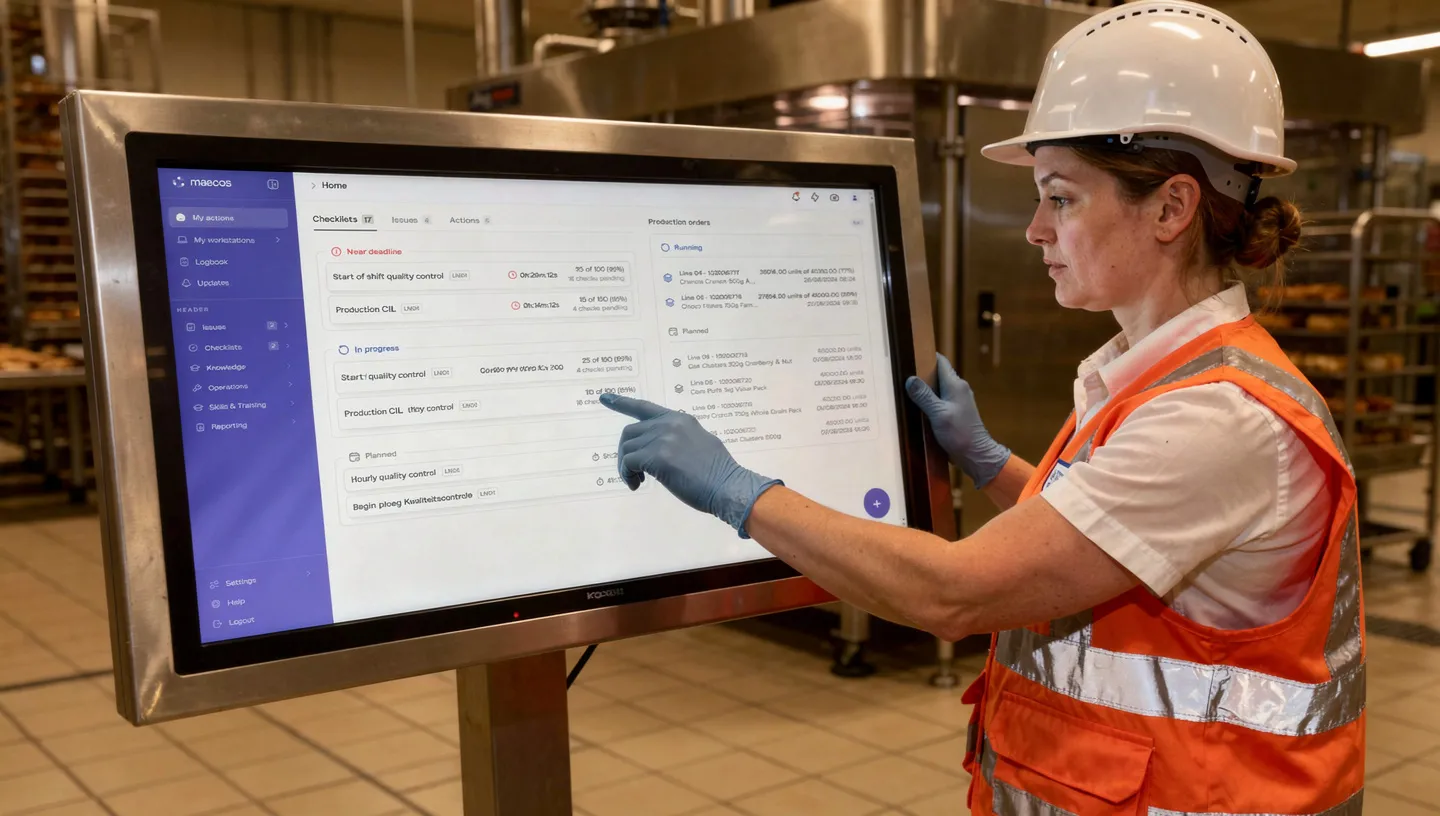
Operator using Maecos standard work checklists on a tablet at a food production line
Qualification-gated checklists that enforce, not just document, the standard
5S · CIL · Gemba · BOS · CL all configurable from one template engine
Offline-capable syncs when connectivity returns

Only qualified operators execute the standard

Operators can only run checklists they're qualified for. When a procedure changes, the checklist locks until retraining is complete. No workarounds. No overrides without documented authorization. The qualification doesn't just track competence, it gates access to work.

Qualification gatingAuto-lock on SOP changeDocumented authorizationRetraining triggers
Standard Work · Line 2 Qualification required
Cleaning Procedure. SOP updated 2 days ago Locked
Ahmad R.. Retraining required Pending
Maria V.. Retraining complete Unlocked
Karim D.. Retraining complete Unlocked

One template. The right steps for every situation.

Checklists adapt based on product, line, or shift context. The same standard work template produces the right steps for the right situation, without maintaining dozens of variants. Configure once, execute everywhere.

5SCILCLGemba WalksBOS AuditsCustom routines
Template: Cleaning Procedure 2 variants active
Line A · Product X, 8 steps Configured
Line B · Product Y, 11 steps Configured
Auto-adapts on product selection Active
Last updated. Yesterday 14:32 Current

Every step is a record. Every deviation has context.

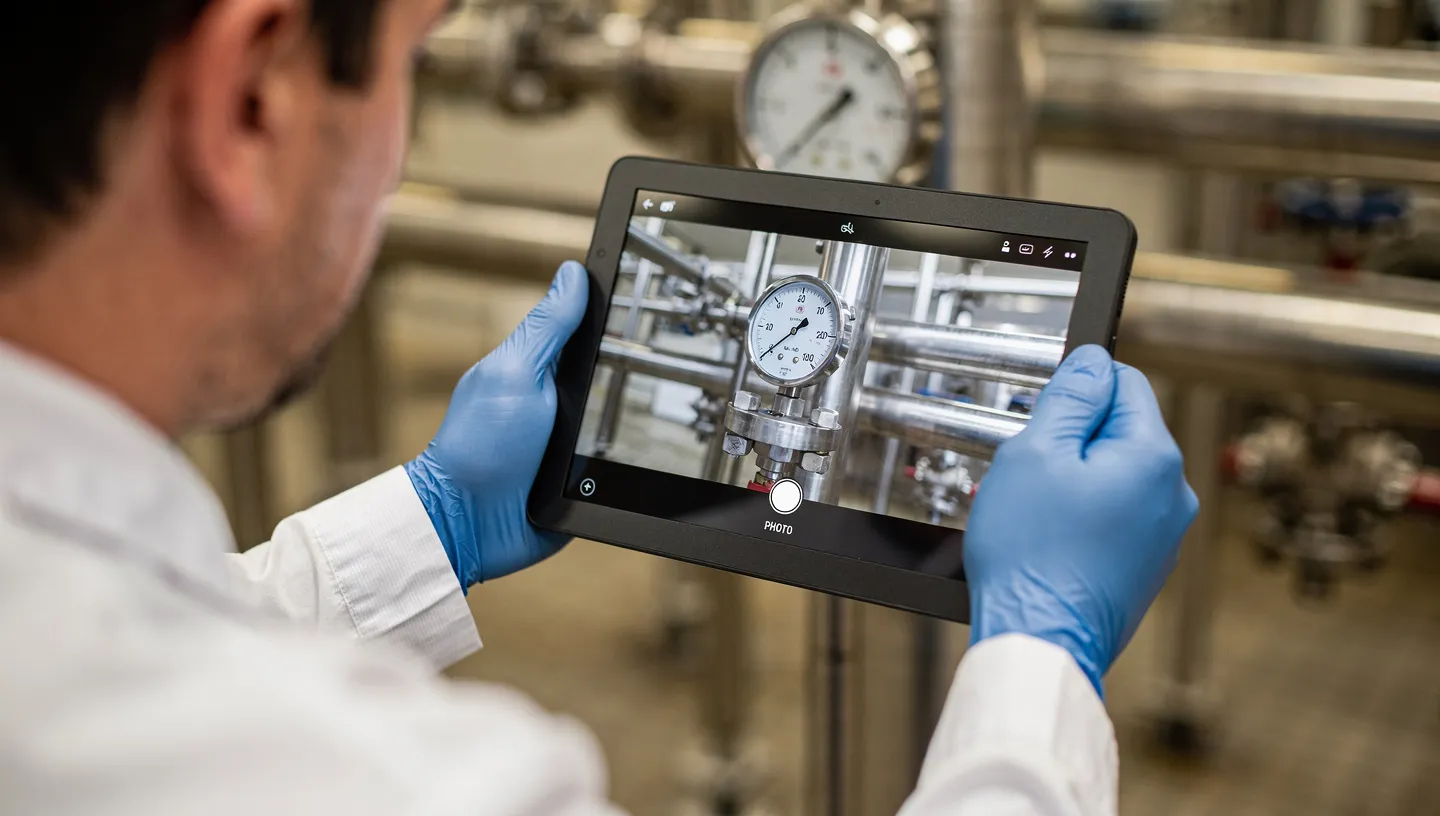
Each step captures readings, photos, timestamps, and operator notes. Not just a checkbox, a traceable record of what happened, linked to the operator and the moment. When something goes wrong, the deviation is captured in context, linked to the checklist step, the operator, and the product. It flows directly into Issue Management for investigation. No separate entry. No lost context.

Photo captureNumeric readingsOperator notesTimestampsAutomatic issue link
Operator photographing a pressure gauge reading for real-time data capture

Works without Wi-Fi. Because the floor doesn't wait.

Full checklist execution without a network connection. Data syncs when connectivity returns. No lost entries. No “the app couldn’t load” during a critical procedure.

Offline executionAuto-sync on reconnectNo lost dataProgressive Web App
Offline mode active Sync pending, 3 entries
No network connection detected Offline
Checklist execution continues Active
3 steps completed, queued Queued
Will sync on next connection Ready
In practice

How Standard Work connects

Yesterday, a procedure changed. The plant engineer updated the SOP in Document Management. Maecos flagged three operators on Line 2 for retraining. This morning, two completed the refresher module. Their checklists unlocked. The third will retrain during the afternoon shift, until then, only qualified operators can execute that standard.

During execution, an operator recorded an out-of-spec reading at step 7. The deviation was captured with a photo and timestamp. It flowed into Issue Management automatically, no separate entry, no lost context. By the time the shift meeting started, the team lead had the deviation, the root cause suggestion from AI, and a draft action.

That's standard work connected to documents, training, issues, and actions. Not five systems. One.
Module connections
Document Management Training Standard Work Issue Management Action Management

The checklist that was completed but the step was skipped. The SOP that changed three weeks ago but nobody told the night shift. The deviation that happened because the operator followed the old procedure, not because they were careless, but because the system didn't tell them it changed.

Standard work should enforce the standard. Not just document it.

“We went from operators skipping steps because the checklist was a formality, to a system where you can’t execute what you’re not qualified for. That changed everything.”

— Line Lead, Food & Beverage Manufacturer

Common questions

Can checklists adapt by product, line, or shift context?

Yes. A single standard work template produces context-specific steps based on product, line, shift, or area. You configure the logic once, the right checklist renders automatically for each situation. No need to maintain dozens of variants.

What happens when an SOP changes?

When a procedure is updated in Document Management, Maecos automatically flags affected operators for retraining. Their associated checklists lock until retraining is complete. Once qualified, the updated checklist unlocks. The link between document change and execution access is structural, not dependent on someone sending an email.

Does it work offline?

Yes. Full checklist execution works without a network connection. Data syncs automatically when connectivity returns. No lost entries, no interruption to production.

How are deviations handled during execution?

When an operator flags a deviation during a checklist step, it's captured in context, with photos, timestamps, readings, and a direct link to the step and product. The deviation flows into Issue Management for investigation. No separate system, no re-entering data.

Your checklists track completion. Ours enforce competence.

Qualification-gated execution, automatic SOP sync, and full deviation traceability, in one system.