Issues don't disappear into email threads or spreadsheets. Every safety observation, quality deviation, and operational incident is captured with context, investigated with structure, and resolved with traceability. AI surfaces similar past issues so investigators never start from zero.
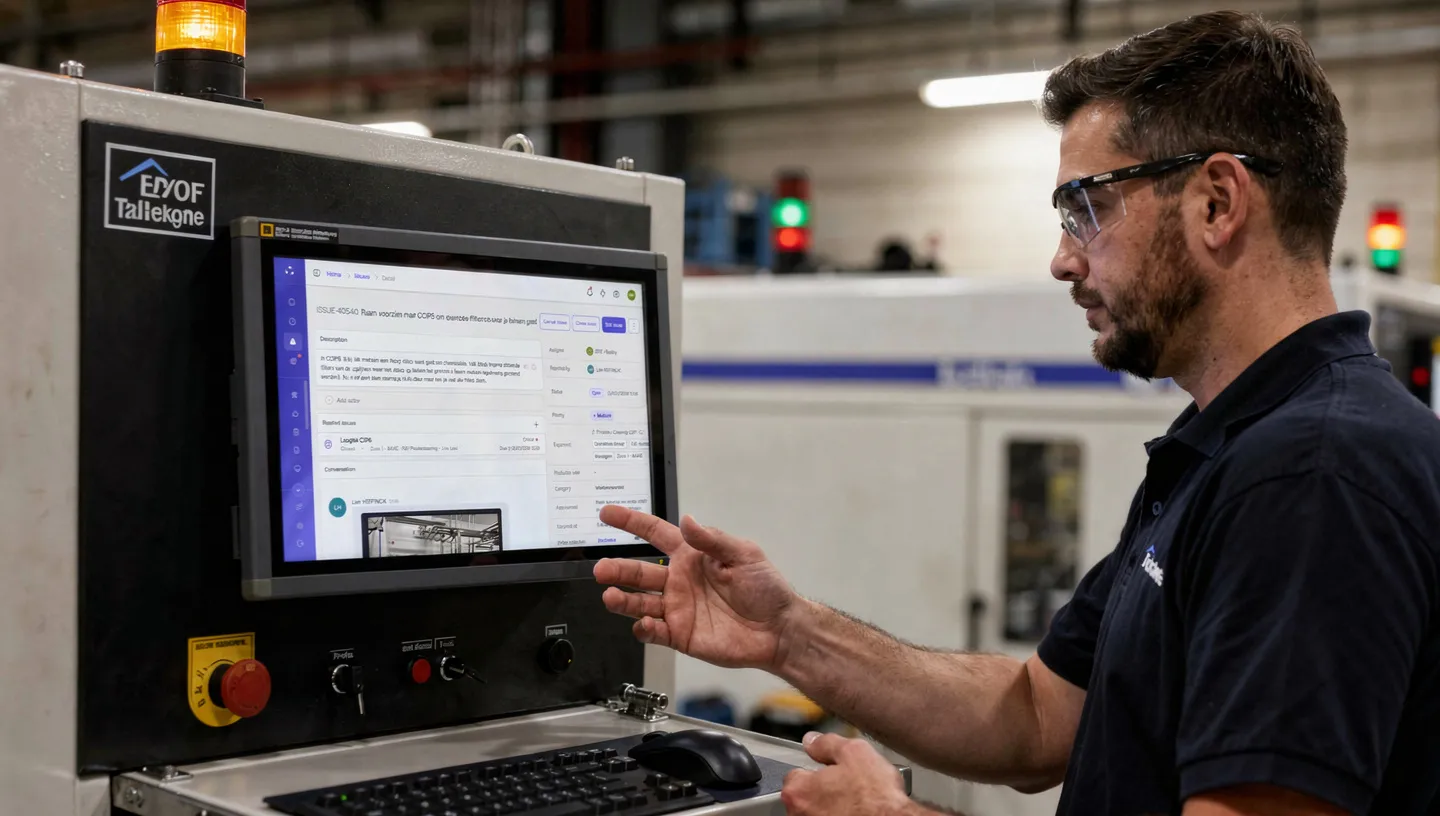
Issues are logged directly from a checklist step, a shift handover, or on the floor. Photos, location, timestamps, and linked procedures are captured automatically. The issue carries its origin, which line, which product, which checklist step, which operator. No re-entering data in a separate system. No context lost between capture and investigation.
When an issue is logged, Maecos surfaces similar past issues and their resolutions. Pattern recognition across your historical data helps investigators get to root cause faster, without starting from zero. Not generic best practices. Your issues. Your solutions. Applied to the current situation.
Configurable investigation templates for different issue types, safety, quality, equipment, environment. Assign investigators, set deadlines, track progress. Each step produces a record. Investigations produce actions, assigned, tracked, and closed in Action Management. Preventive measures link back to procedures and trigger SOP updates and retraining when needed.
Categorize issues by type, severity, line, shift, and root cause. Dashboards surface patterns automatically, recurring issues, hotspot areas, trending categories. When the same root cause appears across multiple lines or shifts, the system makes it visible. Move from fighting fires to preventing them.
An operator logs a quality deviation during a CIL check in Standard Work. The issue captures the checklist step, the line, the product, and a photo. Maecos suggests two similar issues from the past three months, both traced to the same equipment cleaning procedure.
The investigation confirms the root cause: a procedure gap. The SOP is updated in Document Management. A corrective action is created in Action Management and assigned to the maintenance team. Retraining is triggered in Training & Qualifications for all operators on that line.
At the weekly performance meeting, the issue appears on the deviation trend dashboard. The team reviews the resolution, confirms the action is closed, and updates the meeting record. The pattern is broken, structurally, not by memo.
The deviation that happened three times before someone connected the dots. The root cause analysis that lived in a Word document nobody could find. The corrective action that was assigned in a meeting and never tracked to closure.
Issues aren't a failure. Unresolved patterns are.
“For the first time, investigators don’t start with a blank page. The system shows them what the plant has already solved, and that gets them to root cause faster than we thought possible.”
— Quality Manager, Food Manufacturing
Yes. Issues can be created from within a Standard Work checklist step, a shift handover note, or directly on the floor. The issue automatically carries its context, which line, which product, which checklist step, and which operator. No separate system, no re-entering data.
When an issue is logged, Maecos surfaces similar past issues from your organization's history, along with their root causes and resolutions. It ranks suggestions by relevance to the current issue context. This means investigators start with your organization's experience, not a blank page.
Yes. When an investigation identifies a procedure gap, the corrective action can include an SOP update in Document Management. That update automatically triggers retraining for affected operators in Training & Qualifications. The link from issue to document change to retraining is structural, not dependent on someone remembering to send an email.
Issues are classified by type, severity, line, shift, and root cause. Dashboards surface patterns automatically, recurring issues, hotspot areas, trending categories. These trends feed into performance meeting agendas and operational dashboards, so leadership acts on data, not anecdotes.
AI-powered investigation, full cross-module traceability, and structured resolution, in one system.