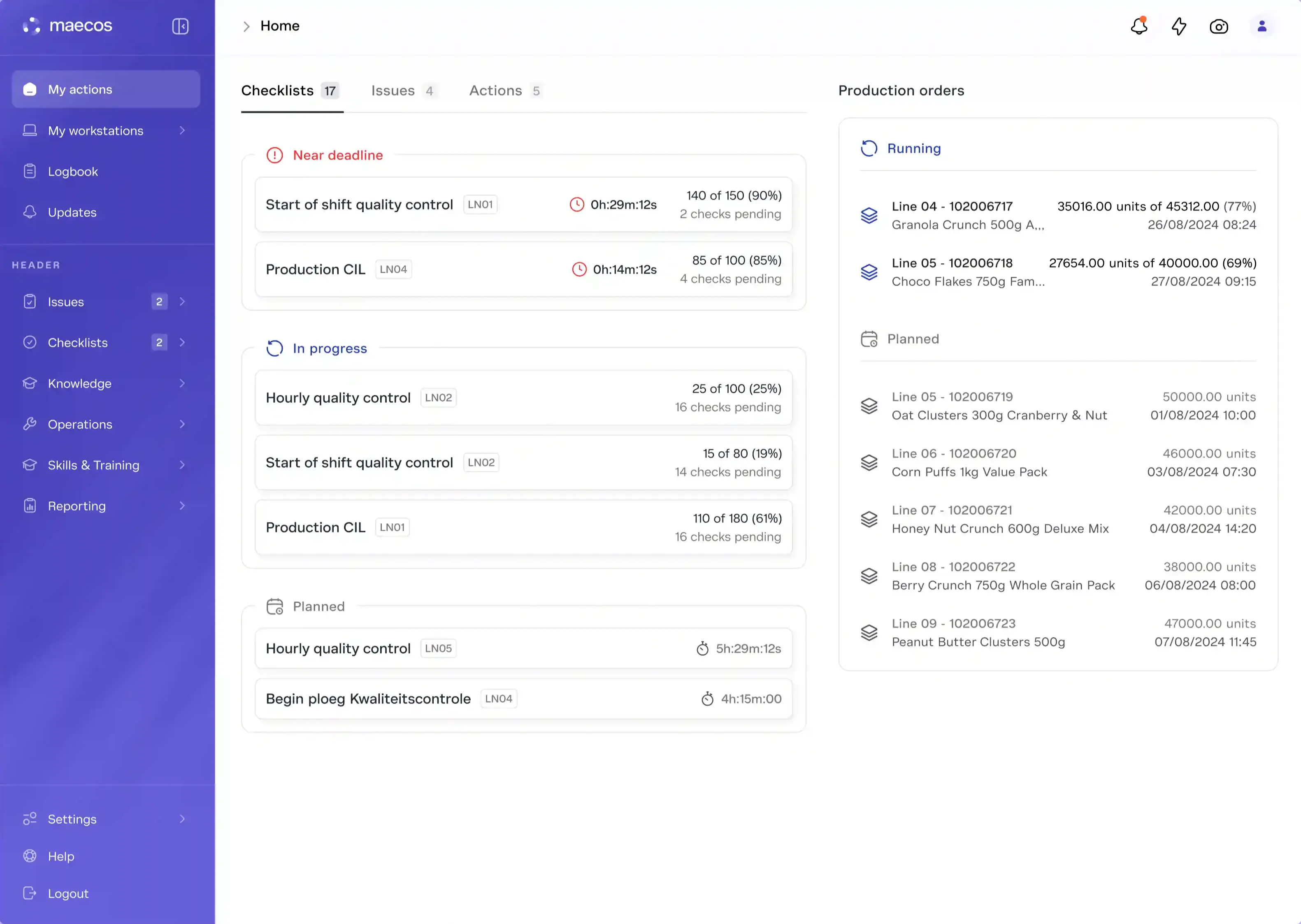
You can run awareness campaigns, put up signage, and remind people every Monday. But if the operator who hasn't completed the confined space training can still execute the confined space checklist, your safety system has a structural gap. Maecos closes those gaps.
Your safety observation system captures incidents after the fact. Your near-miss reporting relies on operators choosing to report. Your permit-to-work process runs on paper or a standalone system that doesn't know whether the operator is trained. The LOTO procedure was updated last month, but you're not sure which shifts have been retrained. You track lagging indicators because leading indicators live in disconnected systems.
Four priorities that determine whether safety runs on system architecture or on individual vigilance.
You need operators who haven't completed safety training to be blocked from executing safety-critical tasks.
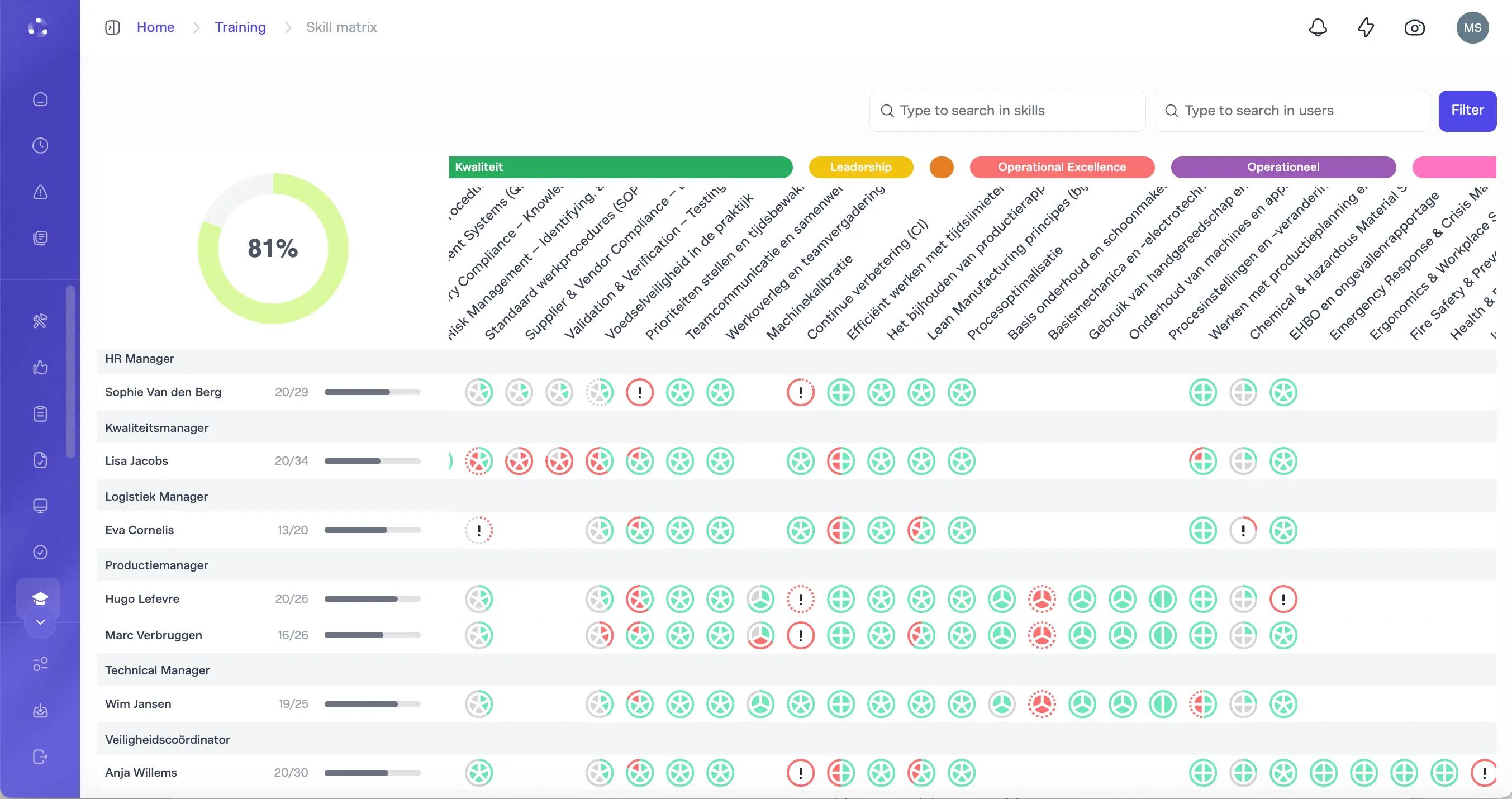
Qualification-gated checklists. An operator without a valid confined space qualification cannot access the confined space checklist. When the LOTO procedure updates, affected operators are flagged for retraining. The checklist locks until they're retrained. No exceptions, no workarounds.
You need observations, near-misses, and unsafe conditions reported in seconds, with context, not in a separate system after the shift.
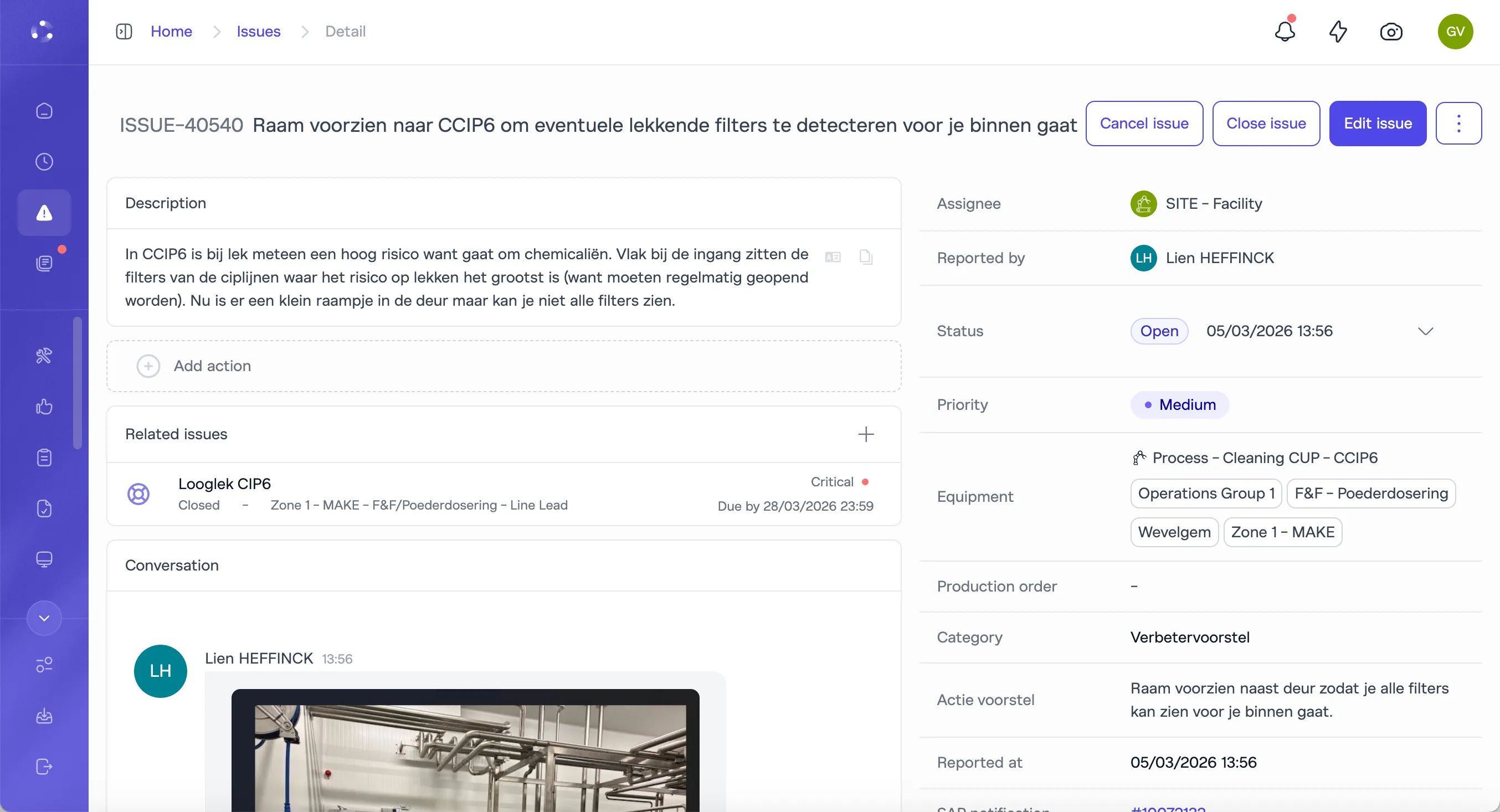
Operators report safety observations from the same interface they use for their daily work. Photo evidence, location, category, and severity captured at the moment of observation. Issues route automatically based on type: near-miss to the safety team, unsafe condition to maintenance, behavior observation to the supervisor.
You need incidents investigated structurally, not just documented. Root cause analysis, corrective actions, and effectiveness verification.
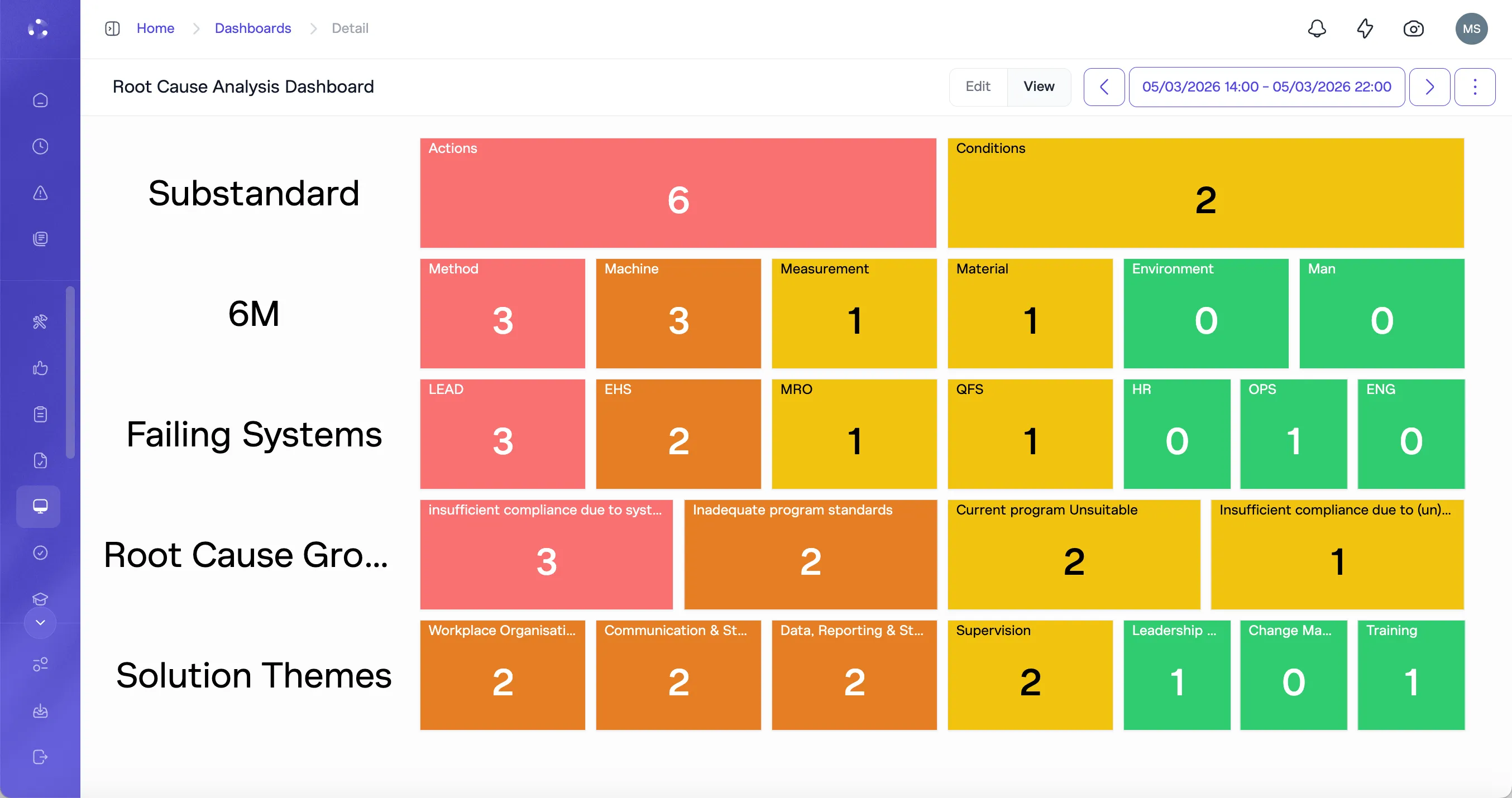
Every incident creates a structured investigation: context, timeline, contributing factors, root cause analysis with the Why-Why tool. Corrective actions assigned with deadlines and escalation. Effectiveness verification required before closure. The investigation is traceable to the original observation.
You need safety performance visible beyond lagging indicators. Observation rates, near-miss trends, training compliance, overdue safety actions.
Safety dashboards with both leading and lagging indicators. Observation rates per area, near-miss trends, safety training compliance, overdue safety actions, and qualification coverage. Drill from dashboard to individual observation in one click. Feed into Power BI for executive reporting.
Structured Behaviour Observation Safety (BOS) walks and Gemba walks with configurable checklists. Observations captured with context and photo evidence. Positive observations and improvement opportunities tracked equally. Each walk produces actions that route to the right owner. Trends across walks visible over time, by area, by shift, by observation category.
"Safety observations tripled in the first quarter. Not because we pushed harder, but because reporting became part of the daily workflow."EHS Manager, Chemicals
EHS leaders evaluating Maecos always want to know these three things.
For shop-floor safety execution, it can. Maecos handles observations, near-misses, incidents, investigations, corrective actions, safety training, and BOS walks. If you have a corporate EHS system for regulatory reporting, Maecos feeds data into it via API.
Reporting happens in the same interface operators use all day. Two taps to open an observation, add a photo, categorize it, and submit. No separate app, no separate login. Low friction drives high adoption. Operators see their observations lead to actions, which drives further reporting.
Safety-critical tasks can require a digital permit workflow before execution. The permit verifies qualifications, requires supervisor approval, and gates the associated checklist. When the task is complete, the permit closes and creates a record.
Safety qualifications are not just records. They gate access to safety-critical checklists. When the LOTO procedure updates, all operators with the LOTO qualification are flagged for retraining. Until they complete it, they cannot execute the updated procedure. Expiring safety certifications trigger automatic reminders and, if not renewed, revoke the associated execution rights.
"For the first time, we can prove that every operator who executed a safety-critical task was trained on the current procedure. Not 'we think so.' We can prove it."Safety Director, Chemicals
The LOTO procedure was updated. You emailed supervisors. Some retrained their teams. You'll find out which ones didn't when something goes wrong.
The LOTO procedure updates. Affected operators are flagged. The checklist locks until retraining is complete. The gap closes automatically.
Near-miss reporting lives in a separate system. Operators forget. Reporting rates are low. You lack leading indicators.
Observations reported from the daily work interface. Two taps. Trends visible by area, shift, and category. Leading indicators are live.
Incident investigations are Word documents. Corrective actions tracked in Excel. Follow-up depends on the investigator remembering.
Investigations structured with root cause tools. Actions tracked with deadlines and escalation. Effectiveness verification required before closure.
“Safety observation rates went from 15 per month to over 200. The difference was making reporting part of the daily workflow instead of a separate activity.”EHS Manager, Chemical Manufacturer
Safety culture transformation across 3 production units
Read full story →See how qualification gating and integrated observations change safety outcomes.